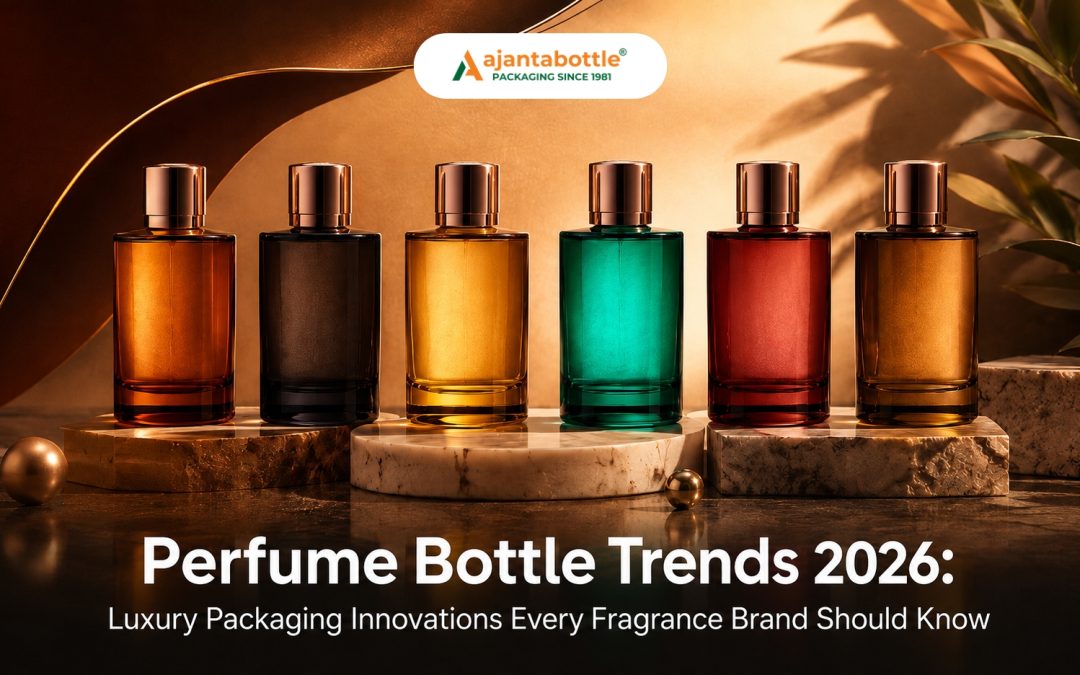
The most relevant perfume bottle trends shaping 2026 include refill-ready packaging, lightweight premium glass, differentiated stock bottles, refined decoration, stronger component compatibility, compact fragrance formats, e-commerce-ready packaging, and designs that can scale across an entire fragrance collection.
These developments show that a perfume bottle is no longer simply a container. It is a long-term brand asset, a retail differentiator, a visual content tool, and an important part of the customer’s product experience.
For fragrance brands, understanding perfume bottle trends early can improve product positioning, reduce expensive packaging redesigns, strengthen shelf presence, and create more memorable brand recognition.
This is particularly important for emerging perfume labels competing with established luxury houses. A strategically selected bottle can communicate quality, price positioning, fragrance personality, and brand credibility before the customer even experiences the scent.
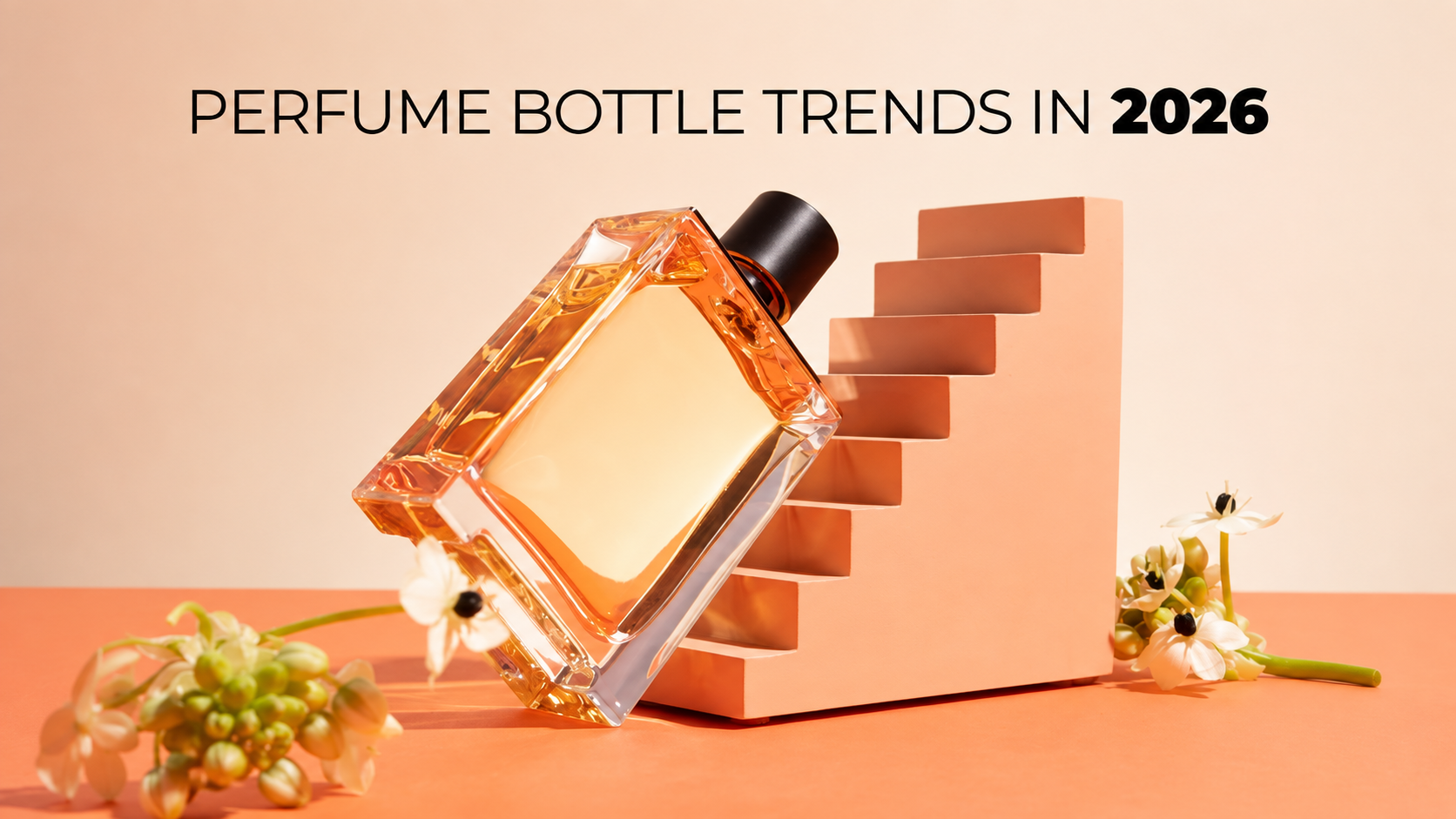
Perfume Bottle Trends 2026 at a Glance
The most practical perfume bottle trends for fragrance brands include:
- Refillable and refill-ready perfume packaging
- Lightweight glass with a premium appearance
- Stock bottles enhanced through custom decoration
- Distinctive but production-friendly bottle shapes
- Minimalist luxury with precise detailing
- Frosted, textured, coated, and screen-printed finishes
- Stronger coordination between bottles, pumps, collars, and caps
- Premium travel sprays and discovery-size packaging
- E-commerce-ready bottle and carton systems
- Packaging platforms designed for future fragrance extensions
Why Perfume Bottle Trends Matter More in 2026
Fragrance packaging is carrying more commercial responsibility than ever. A bottle must communicate luxury on a retail shelf, appear distinctive in digital content, survive e-commerce logistics, support brand storytelling, and meet increasing expectations around material efficiency and responsible packaging.
At the same time, the fragrance market is becoming increasingly crowded. New niche perfume brands, private-label collections, celebrity fragrances, regional labels, and direct-to-consumer businesses are entering the category every year.
In such a competitive environment, perfume bottle trends are not simply aesthetic movements. They indicate how fragrance brands can achieve faster recognition, stronger perceived value, better customer recall, and more consistent packaging across multiple products.
Packaging regulations are also influencing development decisions. Brands selling internationally are facing greater pressure to reduce unnecessary packaging, improve recyclability, control material consumption, and substantiate environmental claims.
This does not mean that every fragrance bottle must immediately become refillable or extremely lightweight. It does mean that eco-design, material efficiency, packaging documentation, and long-term compatibility should be considered at the beginning of the development process rather than after the product has already launched.
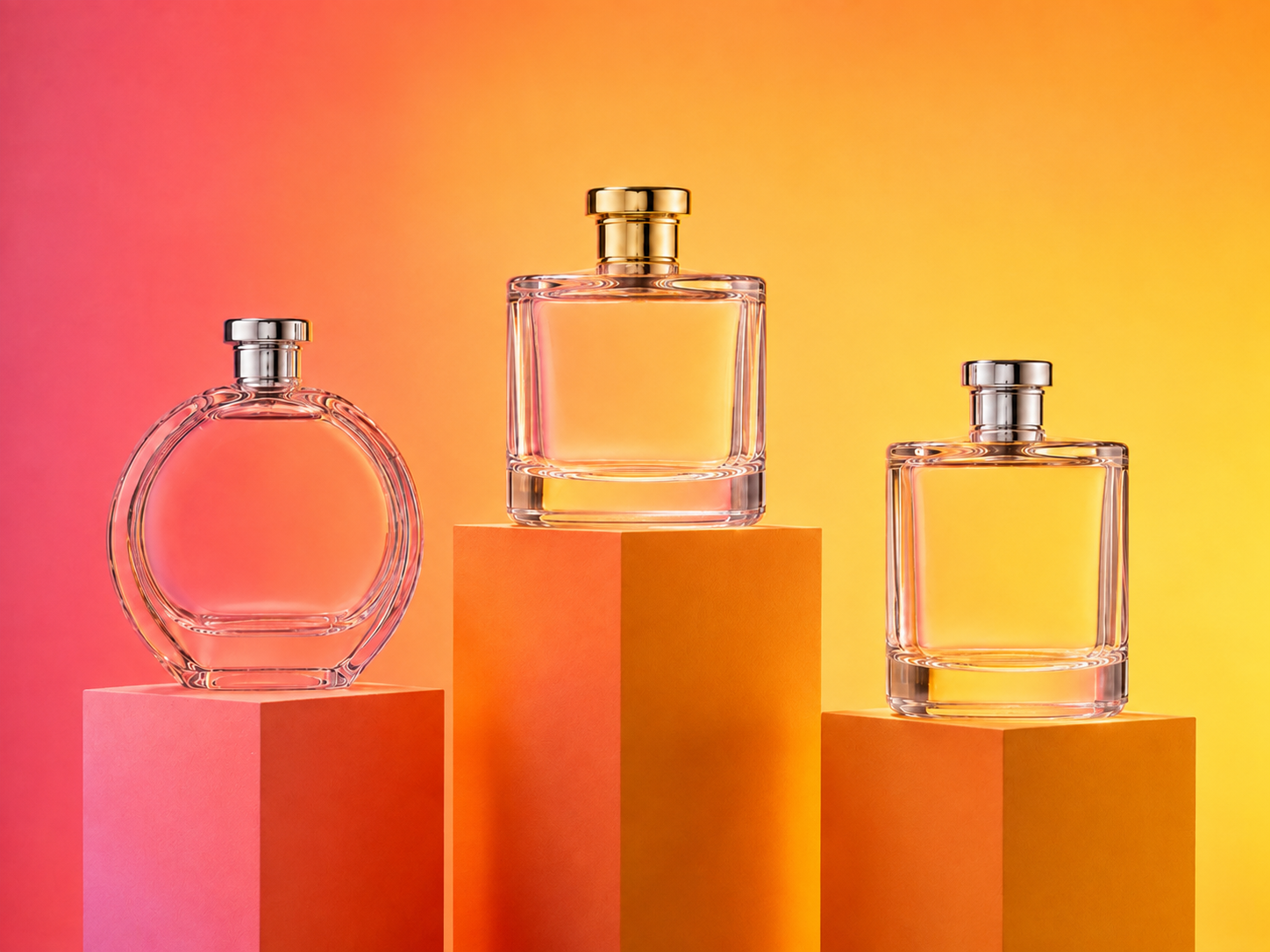
Refillable Perfume Bottles Move Beyond Limited Editions
Among the most commercially important perfume bottle trends, refillability continues to gain relevance. However, the realistic opportunity is not limited to luxury brands installing expensive refill fountains in flagship stores.
More fragrance companies are exploring refill-ready neck designs, removable pumps, screw-neck bottles, refill cartridges, and larger refill formats that allow consumers to retain the original bottle.
Refillable perfume bottles can support repeat purchases while increasing the perceived long-term value of the primary package. Instead of treating the bottle as disposable, the brand positions it as an object worth keeping.
A successful refill system should be:
- Easy to understand
- Clean to operate
- Resistant to leakage
- Compatible with the fragrance formula
- Convenient to store and transport
- Consistent with the brand’s premium positioning
For premium perfume packaging, the refill experience must feel intentional. A complicated or poorly engineered mechanism may frustrate customers and weaken trust.
Before launching refillable perfume bottles, brands should test pump removal, sealing performance, refill speed, fragrance exposure, neck compatibility, consumer instructions, and repeated-use durability.
Refillability should not be adopted only because it is visible among current perfume bottle trends. It should be selected when the brand has the expected customer retention, distribution system, production capacity, and repeat purchase strategy required to support it.
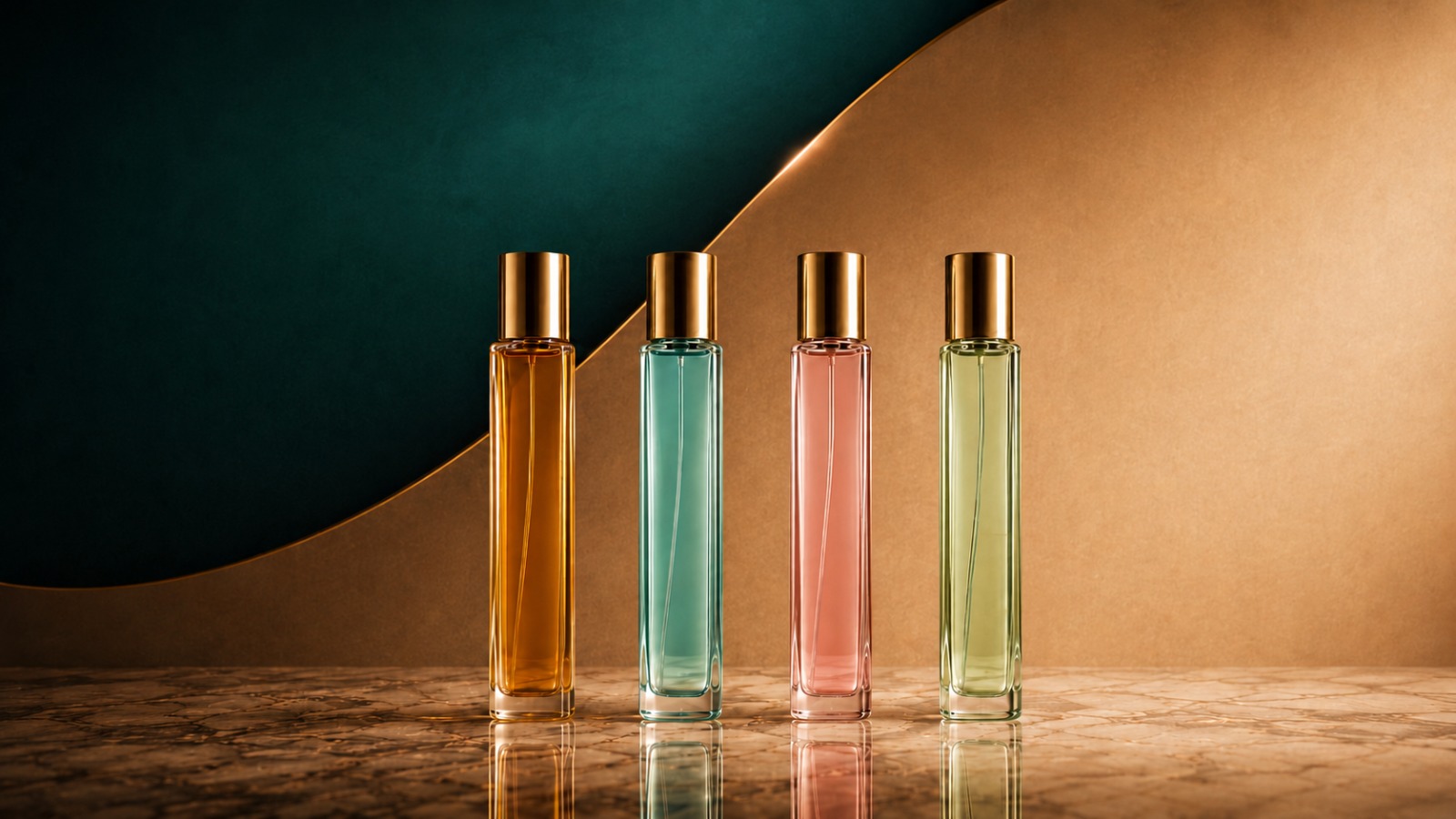
Lightweight Glass Becomes More Commercially Important
For many years, heavy glass bases were used to communicate luxury. While substantial bottles remain popular, one of the most realistic perfume bottle trends is the reduction of unnecessary glass weight without making the packaging appear inexpensive.
This approach can be described as lightweight prestige. The objective is to preserve clarity, stability, visual depth, and premium proportions while improving material efficiency.
A well-designed lightweight bottle can still feel valuable when supported by:
- Balanced proportions
- High-quality glass clarity
- Precise shoulders and edges
- A stable base
- A premium pump and collar
- A well-fitted cap
- High-quality decoration
This shift is particularly relevant for businesses sourcing glass perfume bottles wholesale. Lower packaging weight can contribute to better freight utilisation, easier warehouse handling, reduced shipping costs, and more efficient export packaging.
Lightweighting must still be approached carefully. Reducing glass without considering bottle geometry, filling-line pressure, stacking, drop performance, or transport conditions can increase the risk of breakage.
The strongest perfume bottle trends balance visual luxury with production and distribution realities. Premium packaging should communicate quality through design, finish, precision, and functionality rather than weight alone.
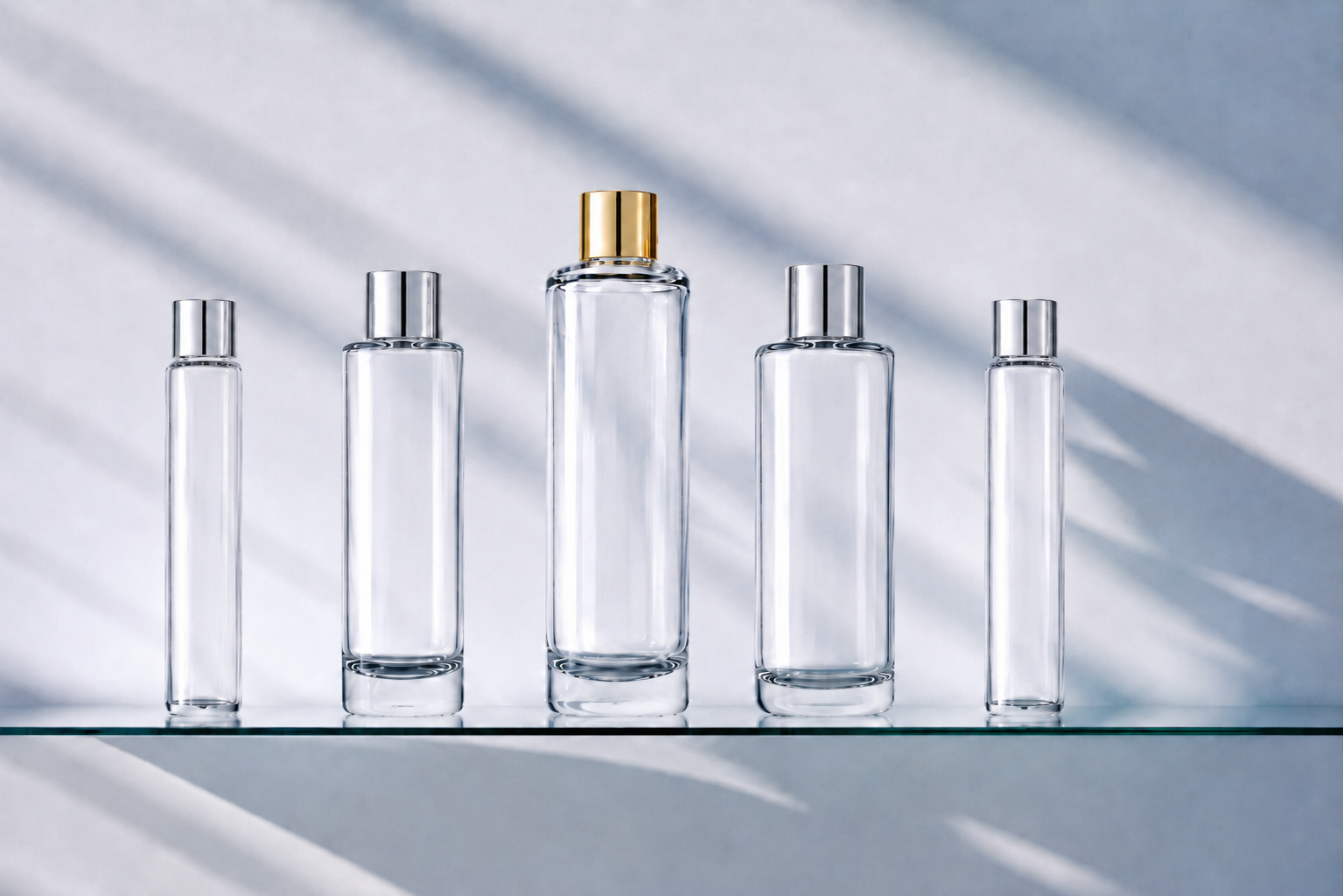
Stock Bottles Gain Value Through Strategic Customisation
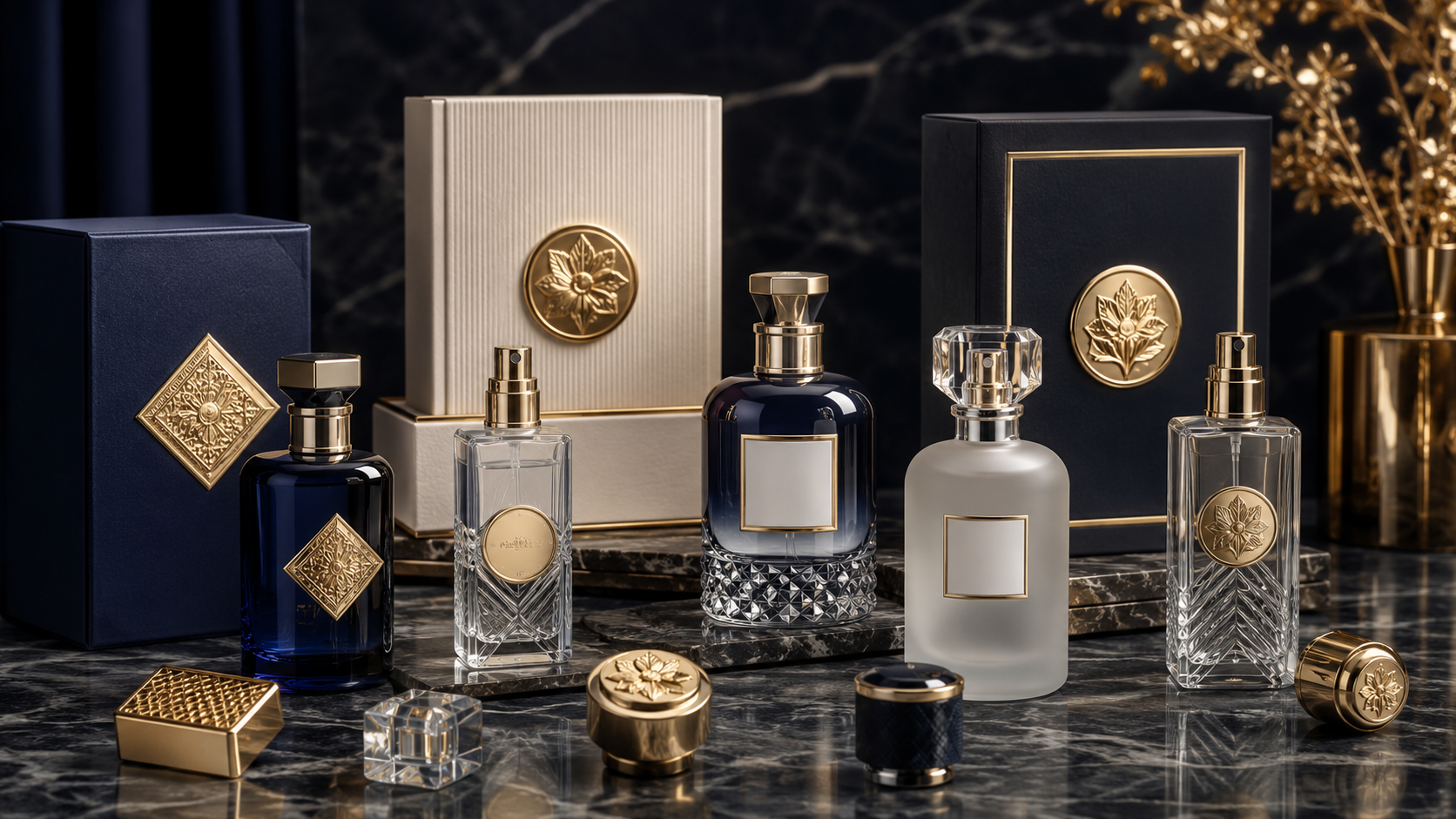
Not every fragrance brand requires a completely custom glass mould. One of the most realistic perfume bottle trends is the use of well-selected stock bottles combined with customised decoration and components.
A standard glass bottle can be differentiated through:
- Custom caps
- Metal or plastic collars
- Pump finishes
- Colour coating
- Frosting
- Screen printing
- Hot foil stamping
- Labels
- Logo embossing on accessories
- Decorative plates or medallions
- Premium secondary packaging
This approach can reduce development costs, lower minimum order requirements, and shorten launch timelines while still giving the brand a distinctive identity.
It is particularly suitable for startups, private-label perfume companies, gifting brands, regional fragrance businesses, and companies testing a new market.
Custom perfume bottles may offer greater exclusivity, but they also require mould investment, technical development, larger production volumes, and longer lead times.
For many growing brands, the best response to current perfume bottle trends is not to create an unusual bottle at any cost. It is to develop a recognisable packaging system using commercially available bottles and carefully coordinated custom details.
Distinctive Shapes Become More Production-Friendly
Sculptural bottles remain relevant, but the market is moving toward shapes that balance visual distinction with production efficiency.
Highly complex forms may create difficulties during manufacturing, decoration, filling, packing, and transportation. As a result, realistic perfume bottle trends favour silhouettes that are recognisable without becoming impractical.
These may include:
- Rounded rectangular bottles
- Wide-shouldered forms
- Soft square silhouettes
- Cylindrical bottles with distinctive bases
- Architectural but symmetrical profiles
- Compact bottles with strong front-facing surfaces
- Subtle asymmetry in the cap or decoration
A successful bottle shape should provide enough visual differentiation while remaining compatible with standard production and logistics processes.
Before investing in custom perfume bottles, fragrance brands should evaluate:
- Annual order volume
- Glass mould development cost
- Production tolerances
- Filling-line compatibility
- Decoration area
- Cap alignment
- Carton dimensions
- Pallet utilisation
- Shipping stability
- Potential use across future launches
The most commercially effective perfume bottle trends are those that can support multiple fragrances, flankers, limited editions, and collection extensions.
Minimalist Luxury Becomes More Precise
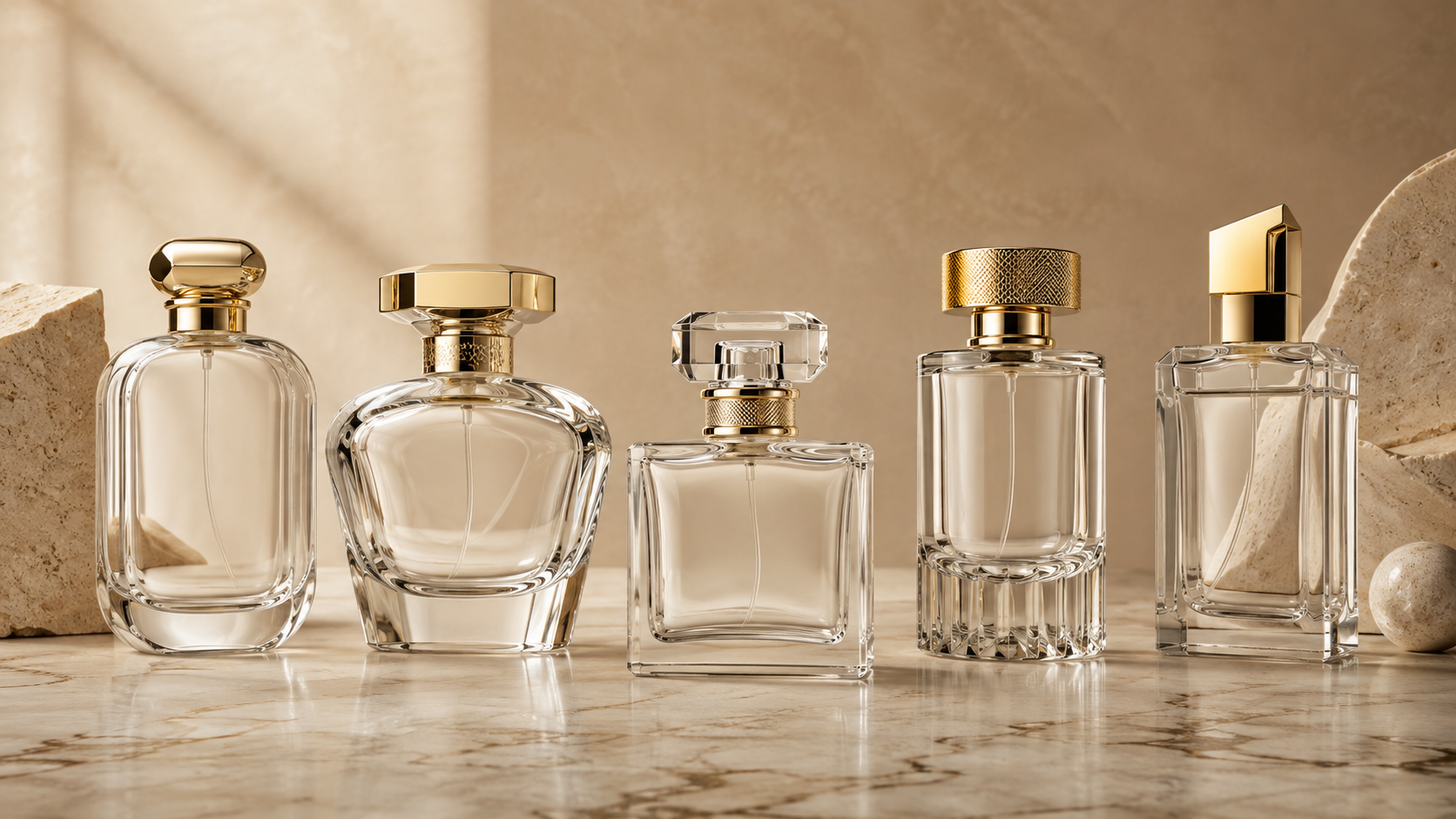
One of the most consistent perfume bottle trends is the movement toward controlled minimalism. Clean geometry, restrained typography, high-clarity glass, subtle branding, and carefully selected materials can communicate confidence and sophistication.
Minimal packaging does not mean generic packaging.
Successful minimalist luxury perfume bottles often include one or two recognisable details, such as:
- A distinctive shoulder profile
- A custom cap shape
- A deep logo embossing
- An internal colour effect
- A precisely positioned screen print
- A premium collar finish
- A heavy-looking but efficiently engineered base
- A characteristic label shape
These designs are particularly suitable for niche fragrance houses, gender-neutral brands, ingredient-focused perfumes, and premium private-label collections.
Minimalist perfume bottle trends require strong quality control because production inconsistencies are more visible when fewer decorative elements are used.
Glass clarity, print registration, cap alignment, collar fitting, pump position, and surface finish must all be carefully controlled.
When the design is simple, every detail contributes directly to the perceived quality of the brand.
Tactile Decoration Creates Stronger Product Recognition
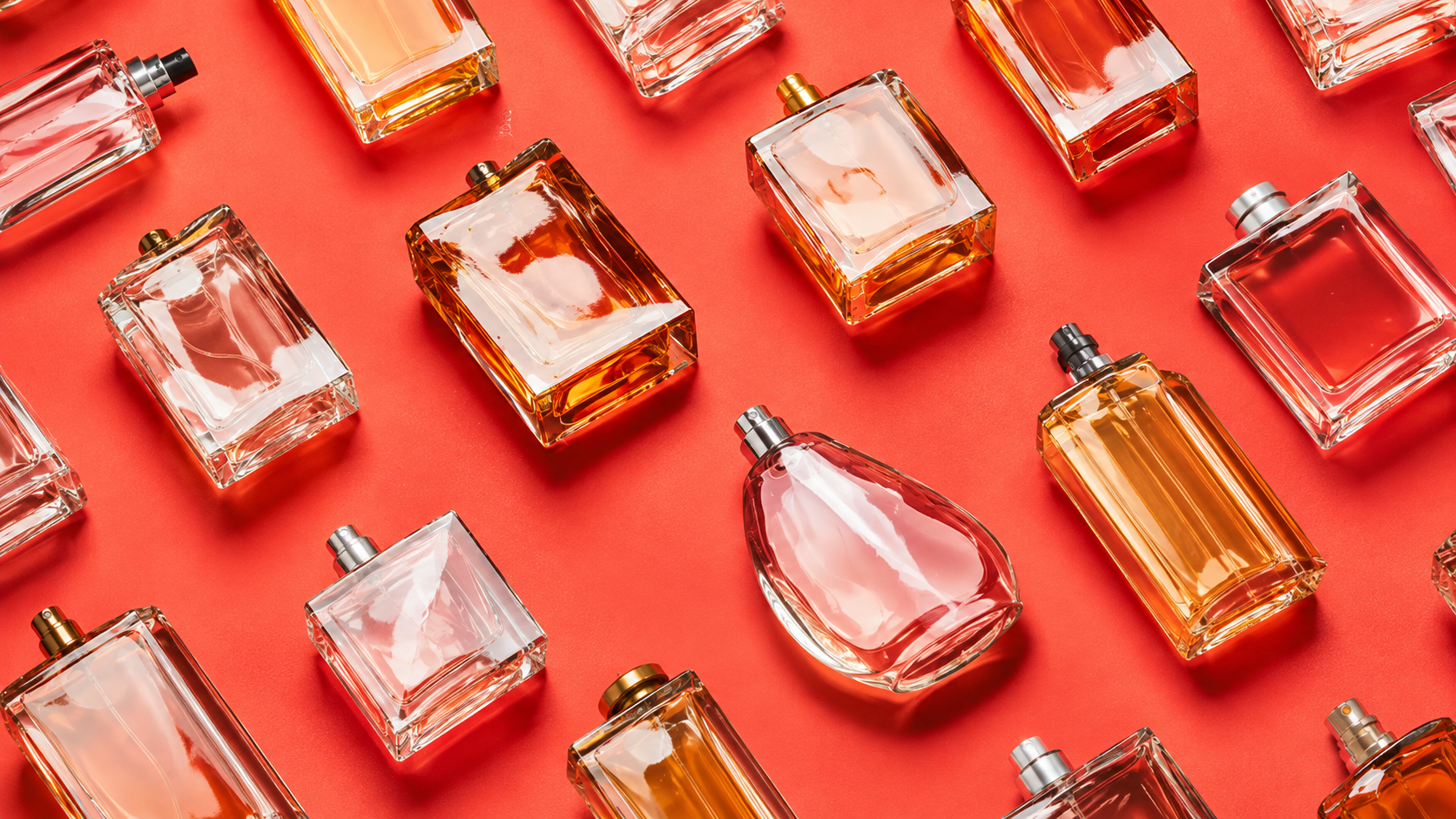
Fragrance is a sensory product, making tactile packaging a natural extension of the experience. Frosting, engraving, raised printing, metallic details, ceramic printing, textured coatings, and contrasting matte and glossy surfaces are becoming more prominent within perfume bottle trends.
The strongest tactile finishes are not added only for decoration. They communicate something meaningful about the fragrance or brand.
For example:
- Frosted glass can communicate softness, freshness, or modern minimalism
- Deep colours can support intense, oriental, woody, or evening fragrances
- Metallic accents can strengthen premium or celebratory positioning
- Fine engraving can support heritage or artisanal storytelling
- Raised logos can improve brand recognition without overwhelming the design
- Transparent areas can reveal the fragrance colour and reinforce authenticity
For custom perfume bottles, decorative techniques should be selected according to production volume, budget, surface compatibility, scratch resistance, and transport conditions.
A visually impressive finish that becomes damaged during shipping can negatively affect the customer’s perception of the product.
The best perfume bottle trends connect appearance, texture, fragrance personality, and real-world durability.
Colour Effects Become More Controlled and Brand-Led
Colour continues to influence fragrance packaging, but brands are moving away from decoration that appears overly random or trend-driven.
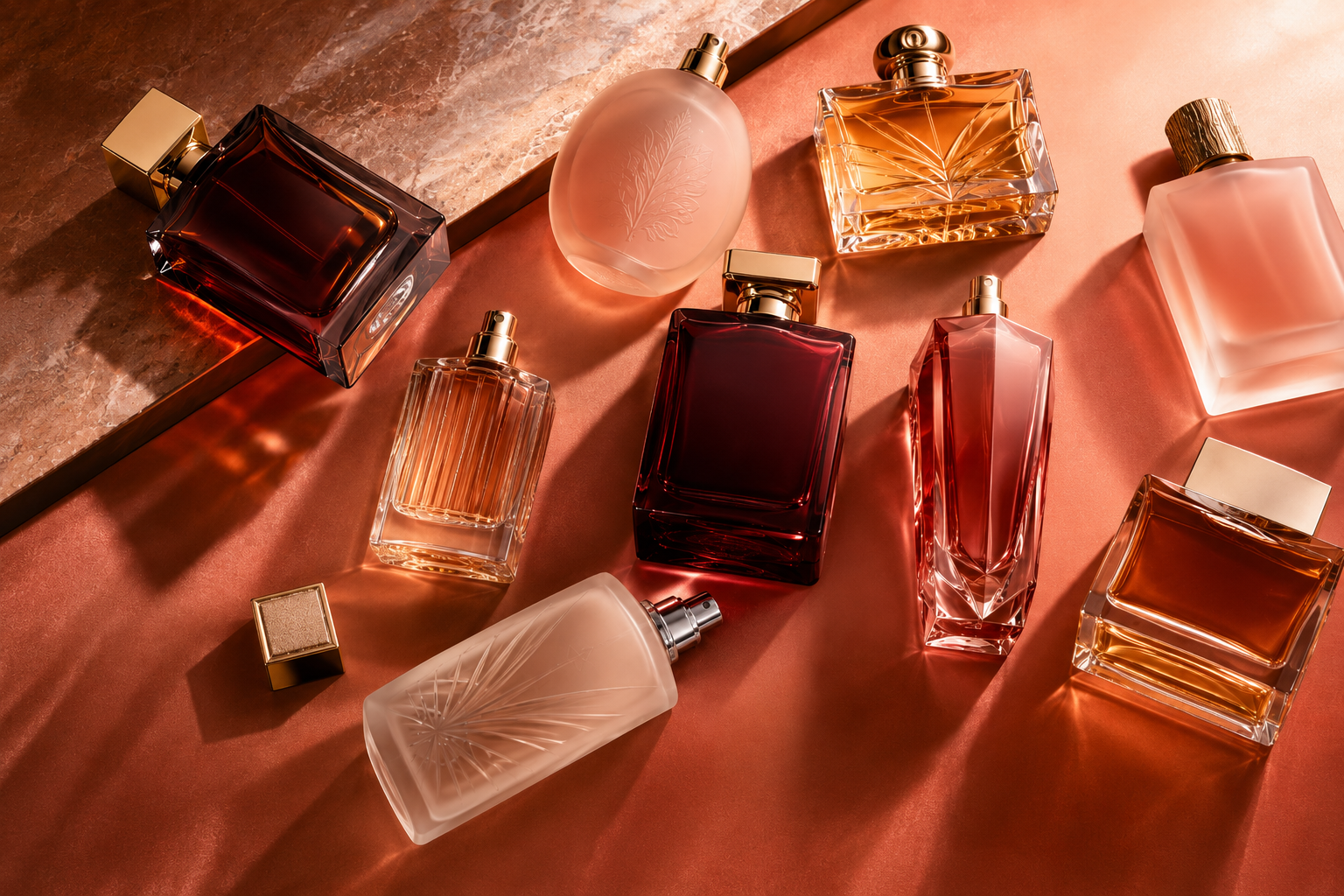
More realistic perfume bottle trends include controlled gradients, translucent coatings, selective colour application, internal colour effects, monochromatic collections, and different shades applied to the same bottle family.
This allows fragrance brands to distinguish products while maintaining a consistent packaging identity.
For example, one bottle shape may be used across an entire collection, with different finishes representing:
- Floral fragrances
- Fresh or aquatic fragrances
- Woody fragrances
- Oud-based fragrances
- Evening perfumes
- Limited-edition launches
This approach creates visual consistency while reducing the need to develop a separate bottle for every fragrance.
Before approving coloured premium perfume packaging, brands should examine:
- Batch-to-batch colour consistency
- Light exposure
- Scratch resistance
- Compatibility with printing
- Fragrance visibility
- Decoration durability
- Recyclability considerations
- Expected appearance under retail and studio lighting
Colour should support product architecture, not simply follow short-lived visual fashion.
Caps and Components Become Central to Differentiation
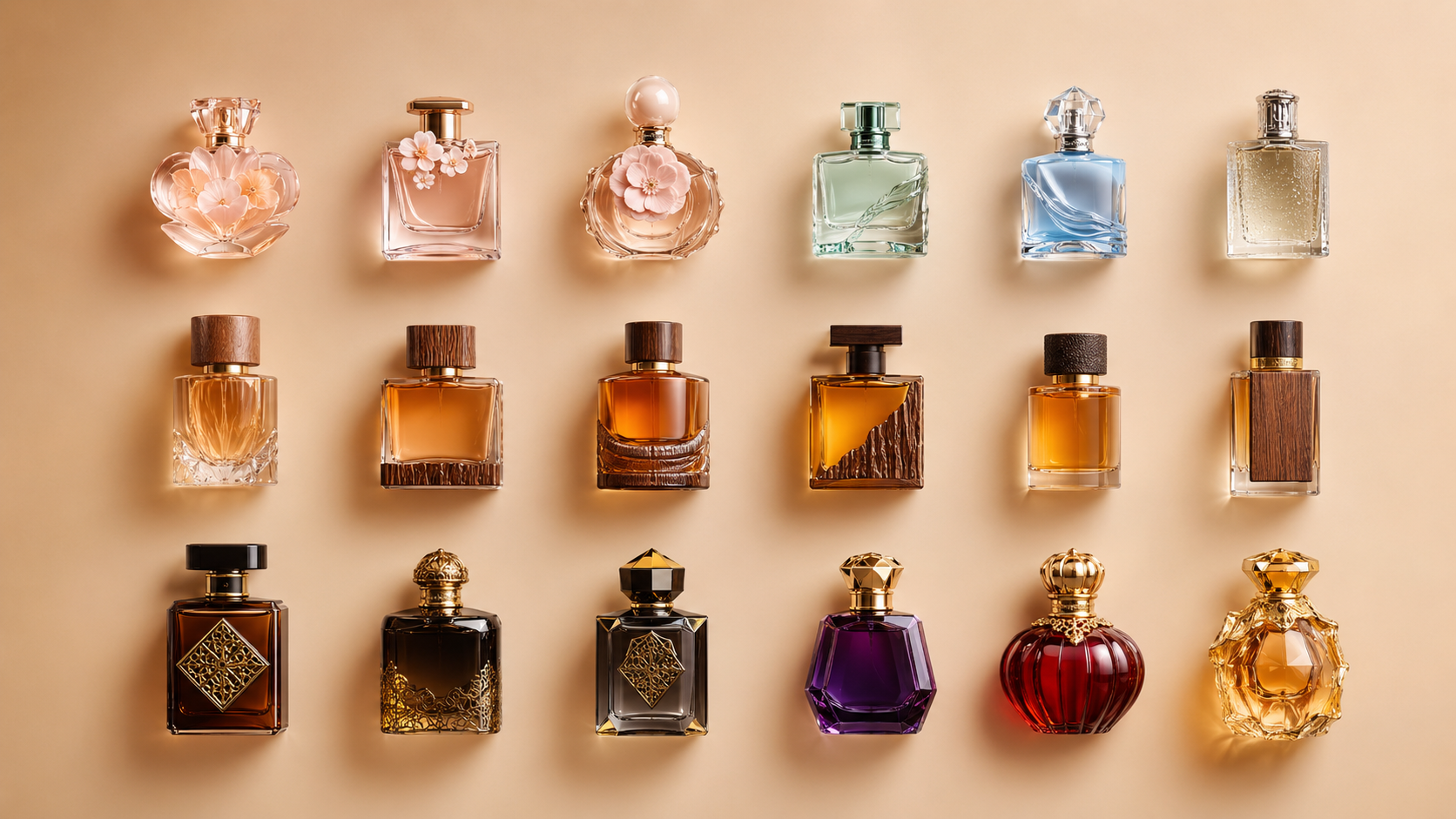
One of the most practical perfume bottle trends is the increasing importance of components around the glass bottle.
When several brands use similar stock bottles, the cap, pump, collar, and decorative accessories often become the strongest visual differentiators.
A custom cap can significantly change the perceived value of a standard bottle. Brands are exploring caps made from or finished to resemble:
- Metal
- Wood
- Stone
- Ceramic
- Leather
- Frosted acrylic
- Glossy resin
- Brushed aluminium
- Textured plastic
However, appearance must be balanced with performance.
A premium cap should fit securely, align properly, survive repeated removal, resist visible scratching, and remain stable during transport.
Similarly, pumps must provide a consistent spray pattern and an appropriate dosage. The collar should conceal technical components cleanly and coordinate with the cap and bottle decoration.
For brands sourcing glass perfume bottles wholesale, bottles and components should be developed as a complete packaging system.
Selecting each element separately without confirming dimensional compatibility can create loose caps, visible gaps, leakage, inconsistent spray performance, or poor alignment.
Premium Miniatures and Travel Sprays Continue to Grow
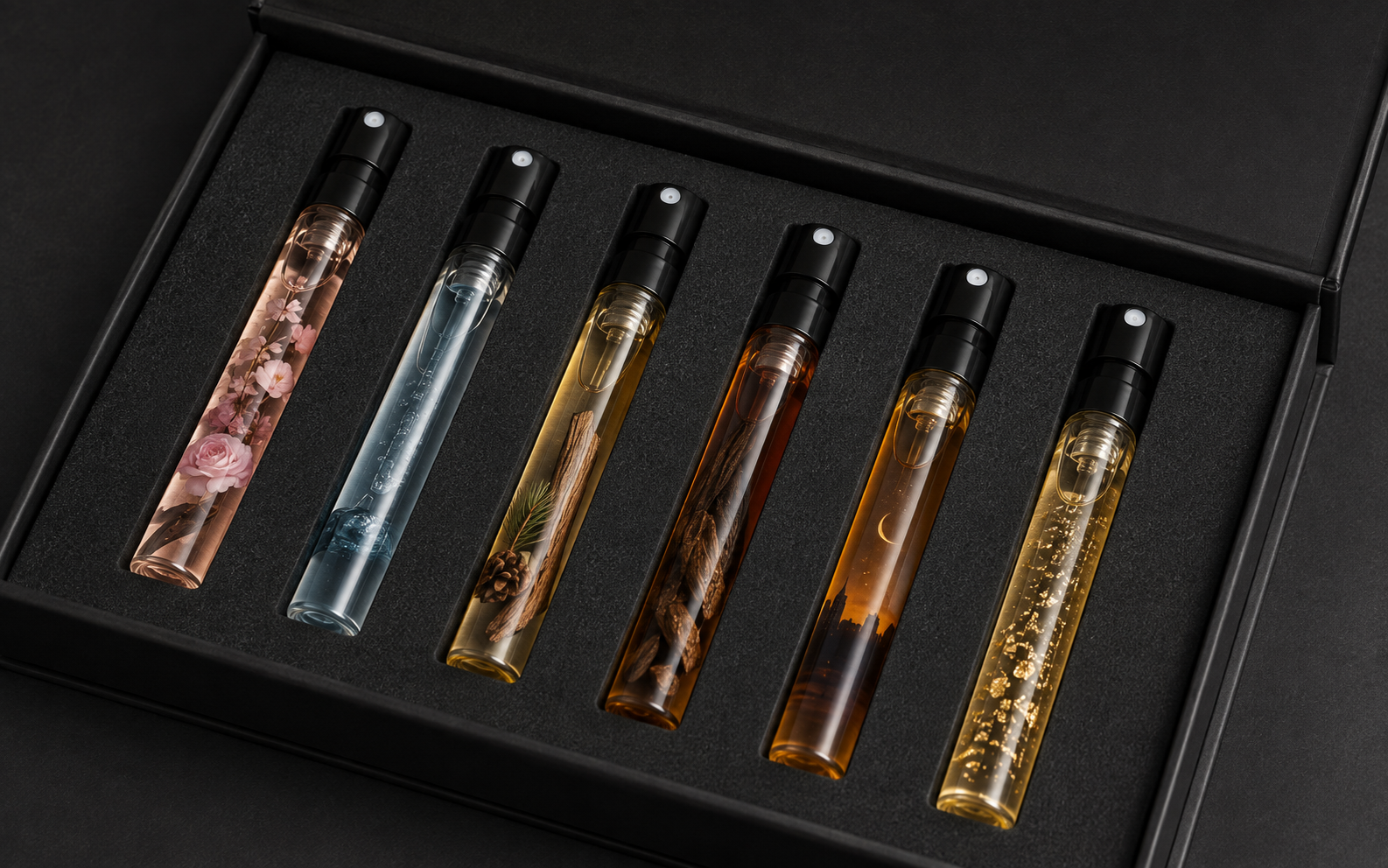
Travel sprays, purse formats, discovery sets, and miniature bottles are becoming commercially valuable products rather than simple promotional samples.
This makes small-format packaging one of the most realistic perfume bottle trends for 2026.
Consumers increasingly want to experience multiple fragrances before purchasing a full-size bottle. They also use different scents for travel, work, gifting, special occasions, and fragrance layering.
This creates opportunities for:
- Paid discovery sets
- Travel retail collections
- Trial kits
- Gift boxes
- Subscription programmes
- Fragrance wardrobe sets
- Wedding and corporate gifting
- Full-size and miniature combinations
For emerging fragrance brands, discovery packs can help reduce the hesitation associated with buying perfume online without testing it first.
Miniature luxury perfume bottles should still reflect the visual identity of the full-size product. Bottle shape, label design, cap finish, colour, and outer packaging should feel connected to the primary collection.
Refillable travel sprays can also add value when the mechanism is easy to use and compatible with the main bottle.
E-Commerce Performance Influences Bottle Design
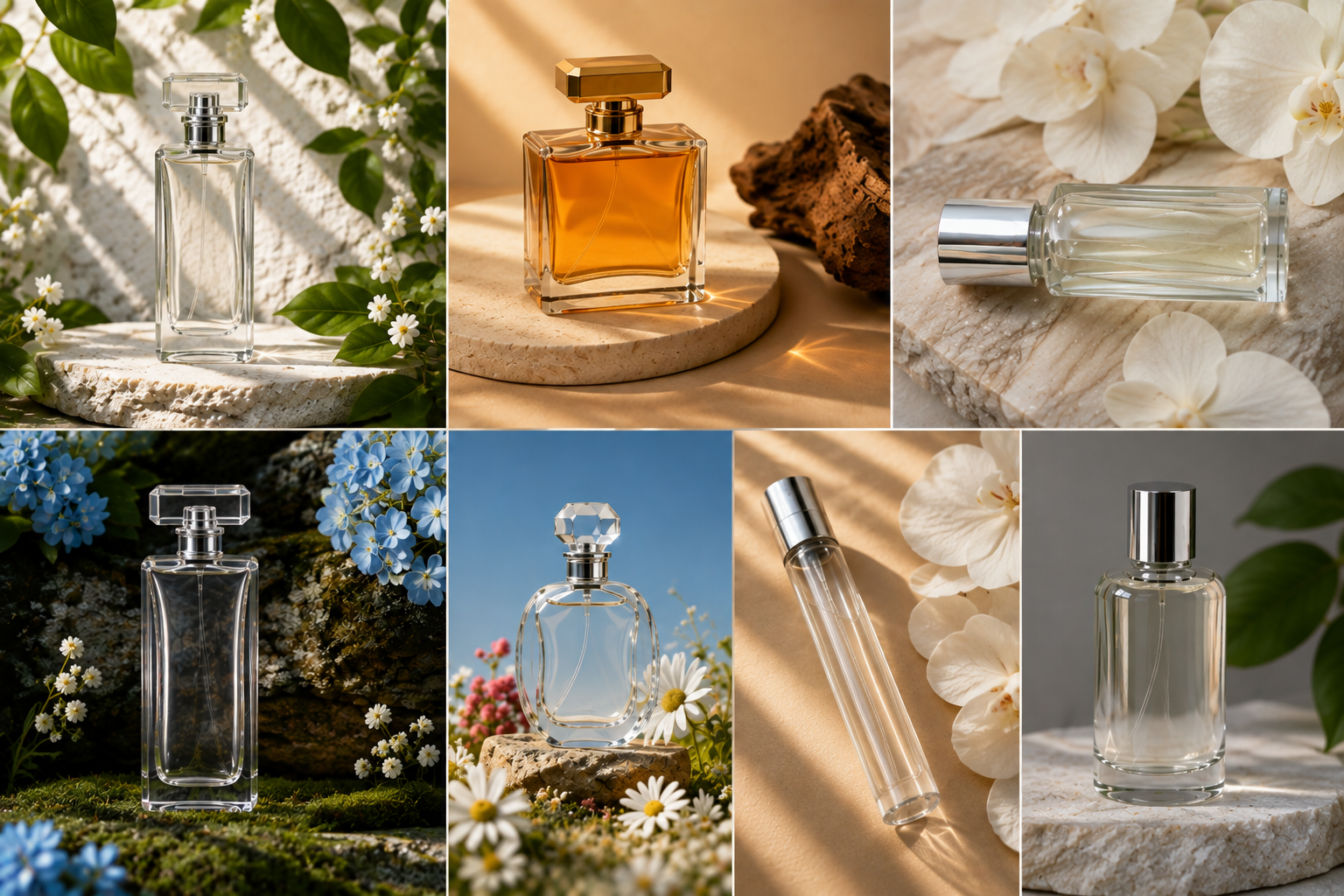
A fragrance bottle may look impressive in a showroom, but still perform poorly during online fulfilment. For brands selling directly to customers, e-commerce durability is becoming an important part of perfume bottle trends.
Perfume packaging must withstand:
- Warehouse handling
- Courier movement
- Vibration
- Temperature changes
- Repeated impacts
- Long-distance transportation
- Different storage orientations
Leakage, cap movement, pump damage, scratched decoration, or broken glass can increase replacement costs and weaken customer trust.
As a result, fragrance brands are paying greater attention to complete packaging systems rather than evaluating the bottle alone.
The bottle, pump, collar, cap, insert, carton, and outer shipper should be tested together.
E-commerce-ready premium perfume packaging may include:
- Better-fitting inserts
- Reduced internal movement
- Protective pump covers
- Stronger neck support
- More compact cartons
- Scratch-resistant surfaces
- Tamper-evident features
- Improved outer shipping protection
This is one of the perfume bottle trends that directly connects packaging design with profitability and customer satisfaction.
Packaging Platforms Replace One-Time Bottle Designs
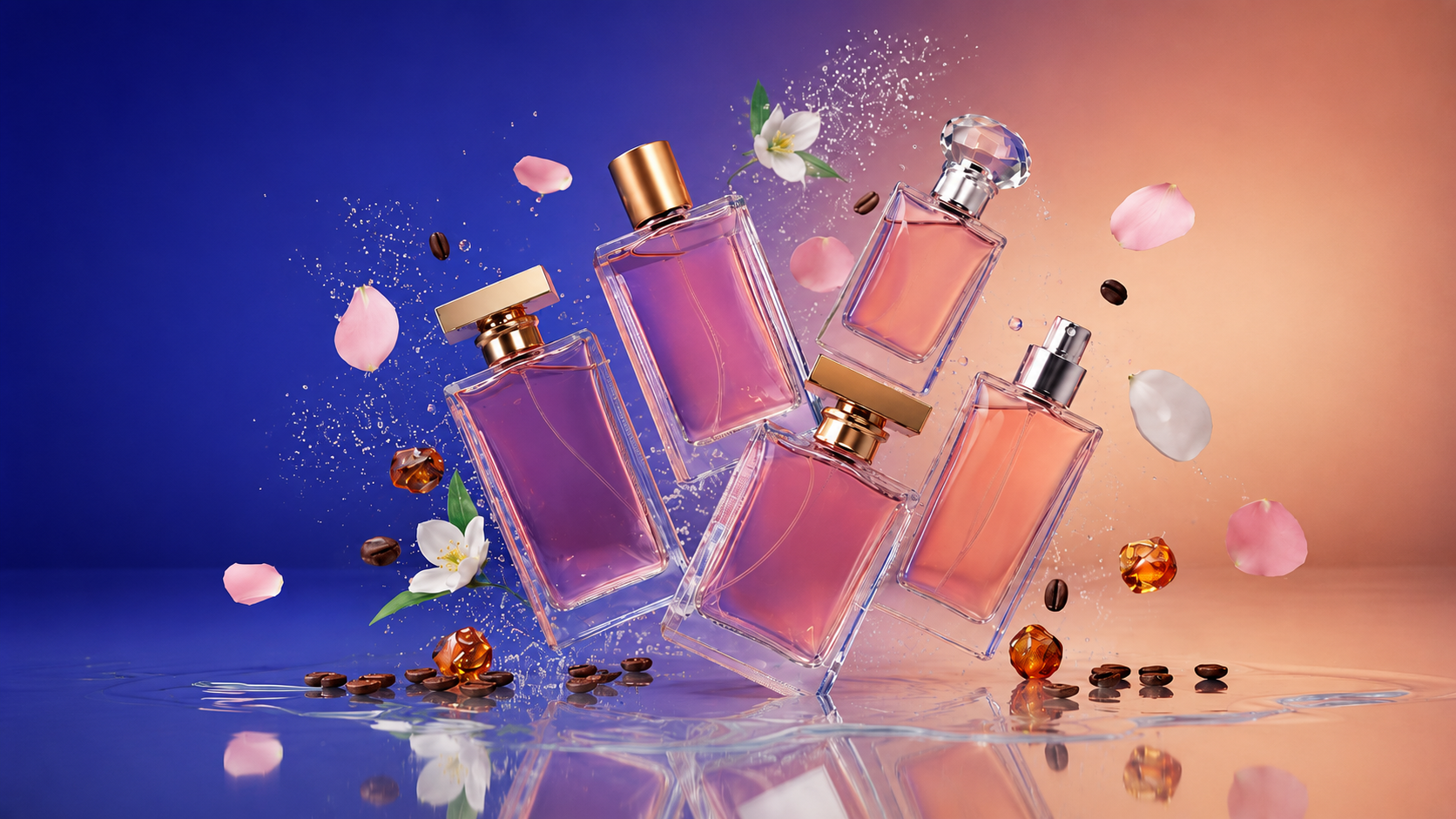
Another realistic development among perfume bottle trends is the use of packaging platforms.
Instead of creating a completely different bottle for every product, brands are building a recognisable packaging family that can support multiple launches.
The same core bottle may be adapted through:
- Different colours
- Alternative caps
- New labels
- Decorative coatings
- Fragrance-specific graphics
- Limited-edition accessories
- Different carton designs
- Multiple bottle sizes
This approach can improve brand recognition while simplifying procurement and inventory planning.
It may also allow brands to negotiate better production volumes for the main bottle and reduce the operational complexity of managing numerous glass shapes.
A packaging platform is particularly valuable for brands planning several product launches over the next three to five years.
The best perfume bottle trends do not only make the first product look attractive. They create a visual system that supports long-term portfolio growth.
Conclusion: The Best Perfume Bottle Trends Build Long-Term Brand Value
The most important perfume bottle trends of 2026 are not temporary visual fashions.
Refill-ready systems, lightweight glass, strategic stock-bottle customisation, refined decoration, coordinated components, premium miniatures, e-commerce durability, and scalable packaging families all reflect a wider shift.
Fragrance packaging must now deliver beauty, functionality, operational efficiency, and commercial scalability at the same time.
For fragrance brands, the objective is not to copy every trend. It is to identify the innovations that strengthen brand recognition, support the intended price point, improve the customer experience, and remain practical across sourcing, filling, shipping, and repeat production.
Ajanta Bottle helps fragrance brands explore glass perfume bottles, pumps, collars, caps, decoration possibilities, and complete packaging solutions for both new launches and expanding product ranges.
By discussing the target market, bottle size, decoration requirement, order quantity, filling process, and brand positioning early, fragrance companies can develop premium perfume packaging that supports long-term business growth.
Ajanta Bottle: 45 Years of Packaging That Builds India’s Shelf Presence
With over 44 years of legacy in the Indian packaging industry, Ajanta Bottle has become more than just a packaging supplier it is a trusted partner to brands looking to scale, differentiate, and lead through design.
From the early days of supplying classic glass containers for pharmaceuticals and household staples to now providing premium glass jars, lightweight bottles, and customized aluminum cans for food and beverage businesses, Ajanta has stayed ahead by understanding what packaging really means in a competitive market.
We have worked with countless Indian brands, both legacy and new-age, helping them:
Launch shelf-ready products with strong first-impression value
Shift from plastic to glass to enhance sustainability and consumer trust
Integrate packaging design with brand stories for premium perception
Optimize for retail stocking, e-commerce delivery, and food service convenience
Our in-house decoration unit, innovative packaging machinery under Akikai, and continuous investment in research and customer education (through platforms like PackSchool) make us uniquely placed to support packaging transformations that matter.
Whether it’s a cold-pressed juice in a sleek amber glass bottle or a handcrafted pickle in a heritage-inspired jar, Ajanta Bottle enables food and beverage brands to lead with packaging that speaks louder than words.
We don’t just supply containers.
We build packaging stories that sell.
Ready to create the perfect glass packaging for your brand?
Connect with us:
● Email at sales@ajantabottle.com
● Phone/Whatsapp: +91 9891098918
You can also shop from more than 500+ packaging solutions on www.ajantabottle.com – India’s first ever comprehensive packaging e-commerce portal.
For additional information, browse through our blog at https://www.ajantabottle.com/public/blog/ or subscribe to our latest updates through our social media channels,
*YouTube channel: https://www.youtube.com/c/Ajantabottle
*LinkedIn Page: https://www.linkedin.com/company/ajantabottle
*Facebook Page: https://www.facebook.com/glassbottleindia
*Instagram Page: https://www.instagram.com/ajantabottle
*Google Business Profile Manager: https://g.page/r/CXTH9MKpe2DuEBM/review