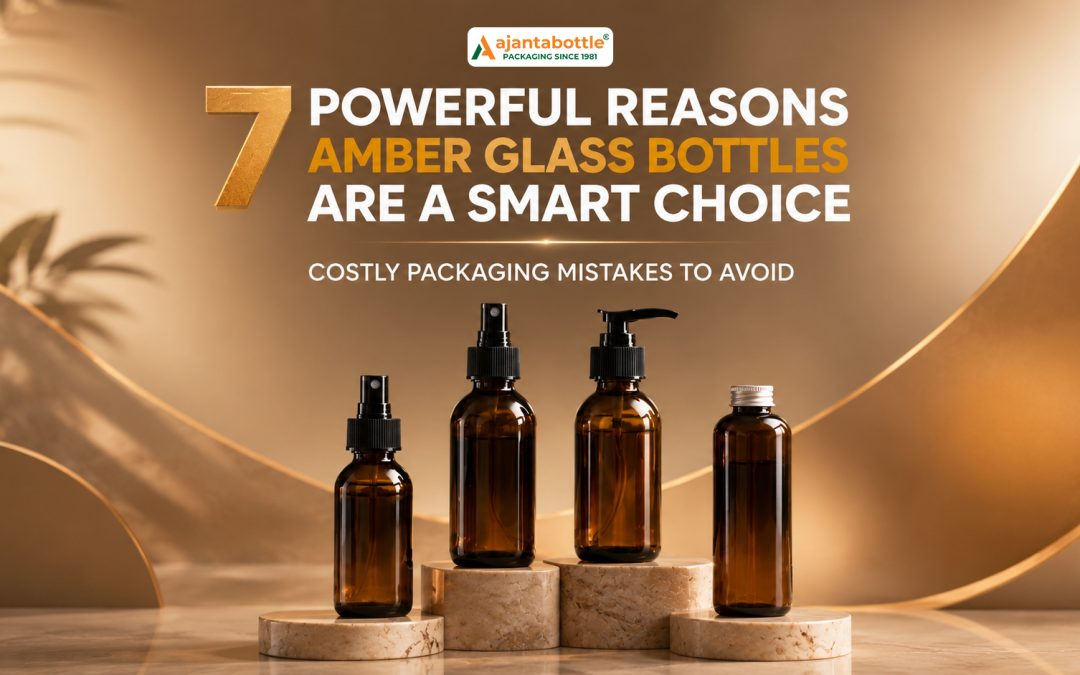
For a light-sensitive pharmaceutical formulation, packaging is not simply a container. It is an essential part of the product-protection system. The brown appearance is not merely a pharmaceutical design convention. Properly specified amber glass can reduce the transmission of ultraviolet and short-wave visible light, helping protect sensitive formulations throughout manufacturing, storage, distribution, dispensing, and use.
However, selecting amber glass bottles by colour, capacity, or price alone can create serious problems. The wrong glass type, closure, neck finish, wall thickness, or dispensing system may result in leakage, instability, filling-line interruptions, inconsistent dosing, product complaints, or failed packaging qualification.
What Are Amber Glass Bottles?
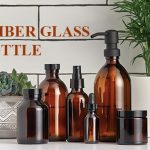
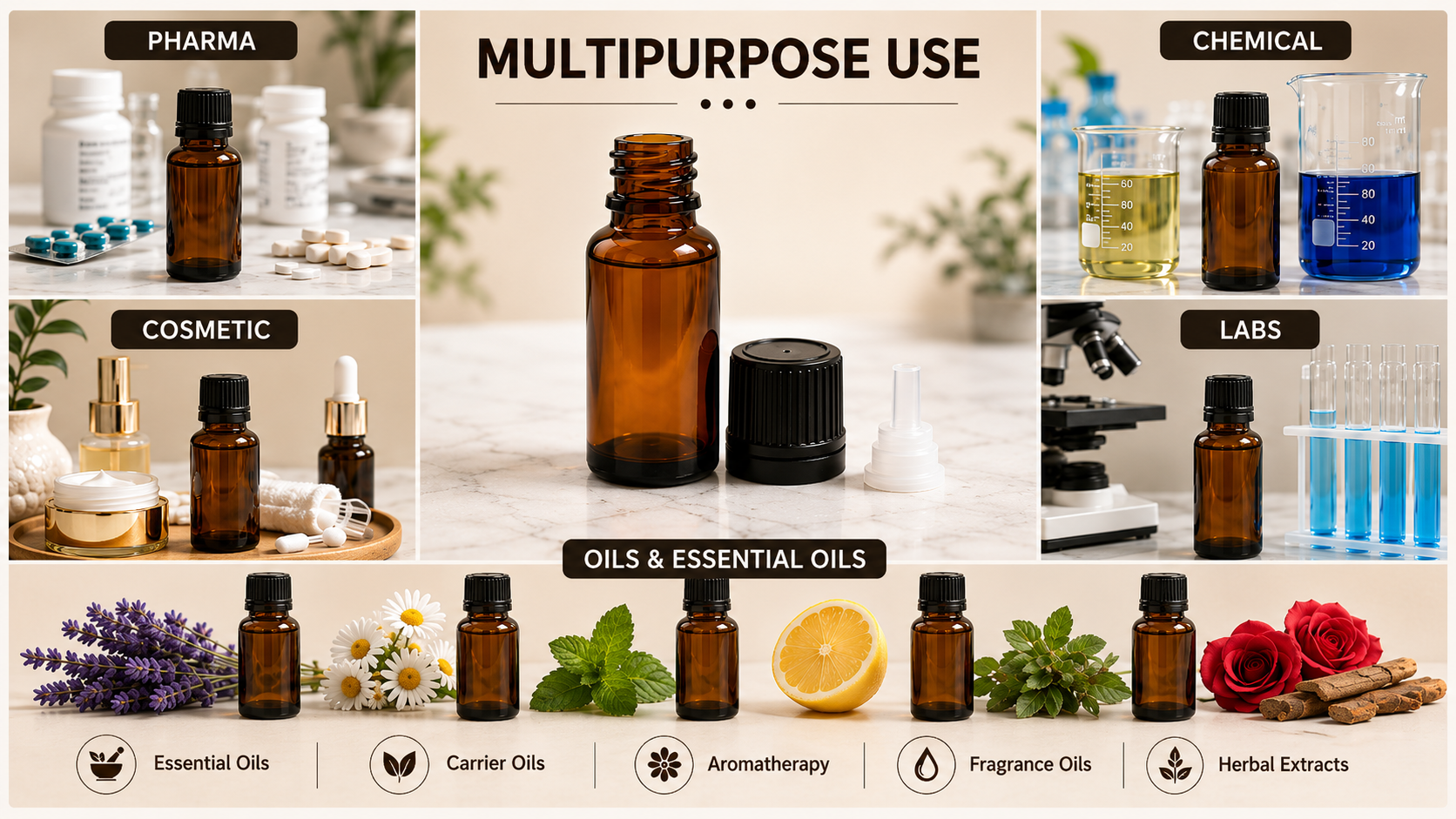
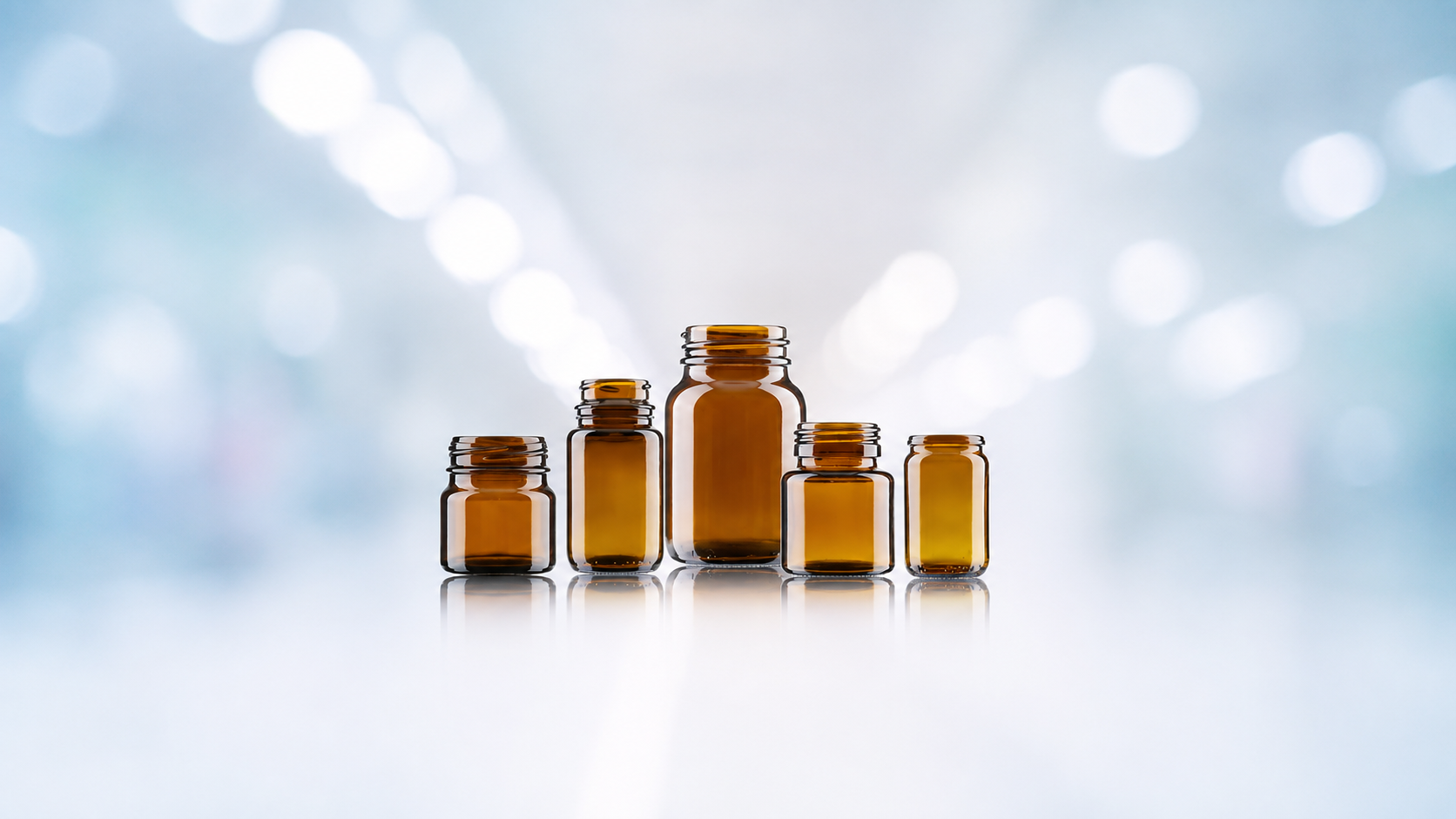
Amber glass bottles are coloured glass containers designed to reduce the amount of potentially damaging light reaching the formulation inside.
They are frequently used for pharmaceutical, nutraceutical, healthcare, laboratory, wellness, and chemical products that require greater light protection than clear glass can provide.
Common applications include:
- Oral syrups and liquid medicines
- Tinctures and herbal formulations
- Light-sensitive tablets and capsules
- Essential-oil-based preparations
- Topical pharmaceutical products
- Ophthalmic preparations
- Laboratory reagents
- Nutraceutical liquids
- Selected injectable formulations
- Sensitive biologic products
The protective performance of amber glass bottles should not be judged by visual darkness alone. Glass composition, wall thickness, bottle design, forming consistency, and the applicable spectral-transmission specification can all influence how much light passes through a coloured container.
The European Pharmacopoeia has specifically highlighted wall thickness as a factor affecting the light transmission of coloured pharmaceutical glass. Its revised approach links maximum transmission measurements more directly to container wall thickness.
That means two bottles that appear to have a similar amber colour may not necessarily provide identical light-protection performance.
Why Do Light-Sensitive Medicines Need Protective Packaging?
Photodegradation occurs when a pharmaceutical ingredient or formulation undergoes an undesirable change after exposure to light.
Depending on the product, light exposure may contribute to:
- Loss of potency
- Oxidation
- Discolouration
- Formation of degradation products
- Changes in odour
- Precipitation
- Changes in viscosity
- Protein aggregation
- Reduced product stability
ICH Q1B establishes a structured approach to photostability testing and states that the intrinsic photostability characteristics of new drug substances and products should be evaluated to demonstrate that light exposure does not produce unacceptable change. When testing shows that a formulation requires light protection, the immediate packaging becomes a critical part of the stability strategy.
A secondary carton may provide additional protection, but it cannot always protect a formulation during filling, inspection, labelling, dispensing, or repeated use. Properly qualified amber glass bottles place the light barrier directly around the product.
7 Powerful Benefits of Amber Glass Bottles
1. They Help Protect Light-Sensitive Formulations
The most important advantage of amber glass bottles is their ability to reduce the transmission of light across relevant ultraviolet and visible-light wavelengths.
This protective function can be valuable for pharmaceutical ingredients that are prone to photochemical reactions. By reducing the amount of light reaching the formulation, the primary container can support the product’s overall stability programme.
However, amber packaging should not be viewed as a universal guarantee of photostability. Its suitability must be established through:
- Spectral-transmission specifications
- Product-specific photostability studies
- Accelerated and long-term stability testing
- Evaluation of the proposed commercial pack
- Appropriate storage instructions
The primary package and secondary packaging should work together as a complete protection system.
When properly qualified, amber glass bottles can help reduce exposure during:
- Manufacturing and filling
- Quality inspection
- Internal handling
- Warehousing
- Transportation
- Pharmacy storage
- Patient or consumer use
This is particularly valuable for products that may remain outside their secondary carton during dispensing or repeated use.
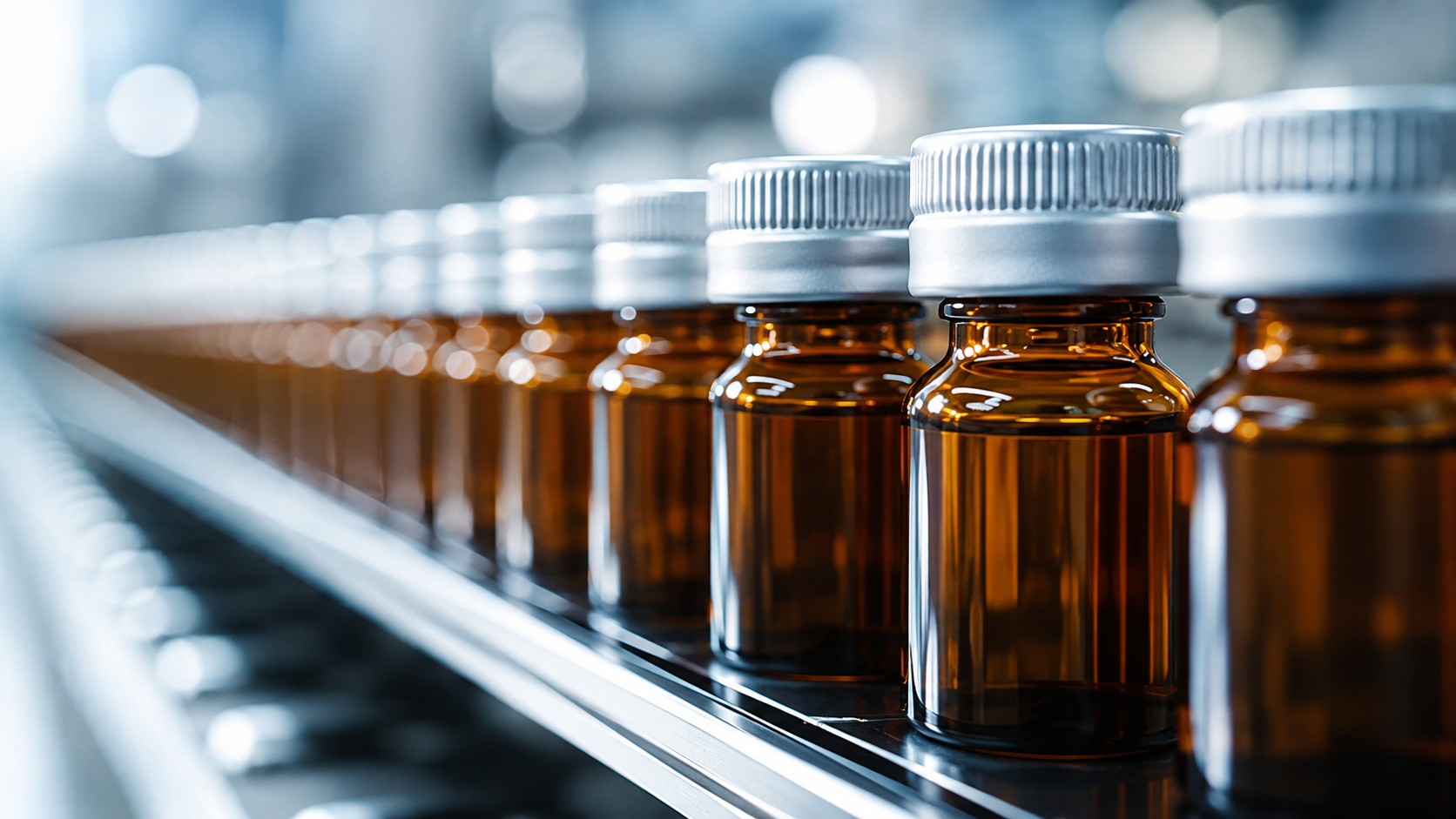
2. They Can Support Product Stability and Shelf-Life Protection
Pharmaceutical shelf life is established by evaluating how product quality changes over time under environmental influences such as temperature, humidity, and light.
Because light can be a stability variable, selecting the right packaging may help maintain critical product attributes throughout the intended shelf life.
Properly specified amber glass bottles can contribute to the protection of:
- Assay and potency
- Product colour
- Clarity
- Odour
- Viscosity
- Dissolution characteristics
- Degradation-product limits
- Physical appearance
The commercial benefit is significant.
A packaging system that protects stability can reduce the risk of:
- Product recalls
- Customer complaints
- Premature expiry
- Batch rejection
- Distribution losses
- Regulatory questions
- Damage to brand credibility
Packaging cannot improve an unstable formulation, but it can prevent unnecessary environmental exposure from becoming an additional source of product deterioration.
For pharmaceutical brands, this makes amber glass bottles more than a packaging purchase. They become part of the product’s quality and risk-management strategy.
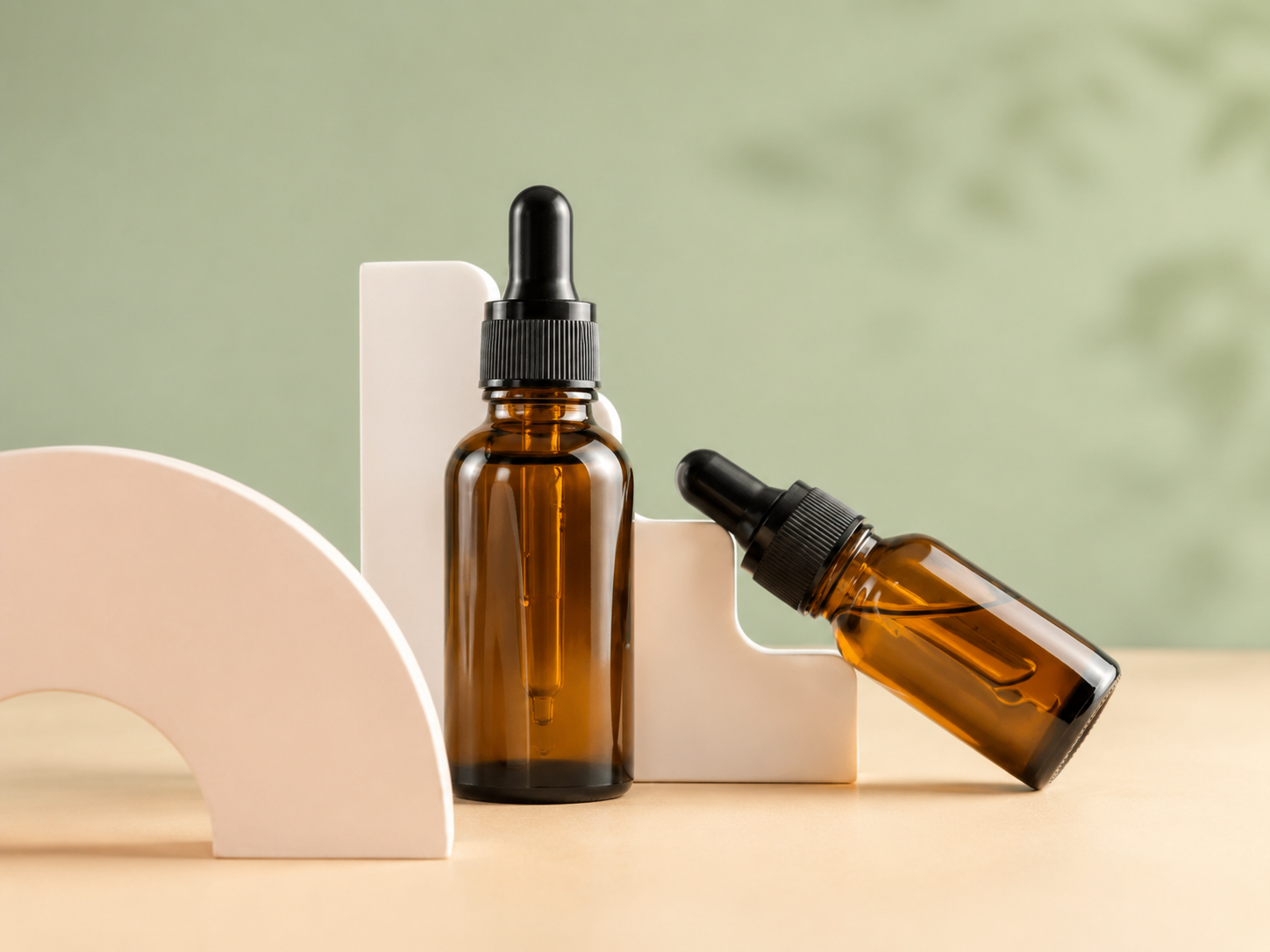
3. They Are Available in Different Pharmaceutical Glass Types
Not all pharmaceutical glass performs in the same way.
Glass containers are classified according to characteristics such as hydrolytic resistance. This indicates how resistant the glass surface is to releasing alkaline components when it comes into contact with water under specified test conditions.
USP guidance generally describes:
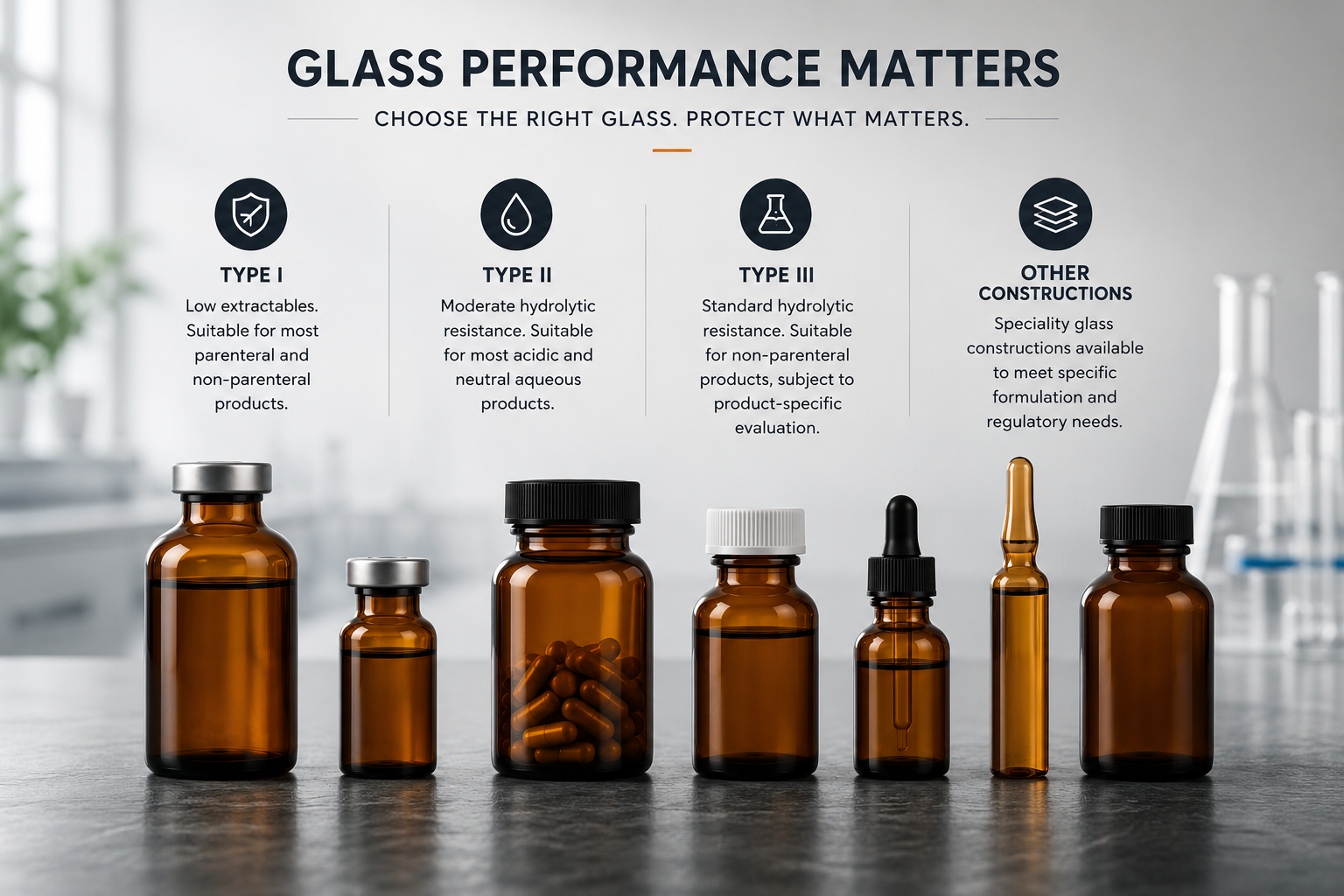
- Type I performance: Suitable for most parenteral and non-parenteral products.
- Type II performance: Suitable for most acidic and neutral aqueous products.
- Type III performance: Generally suitable for non-parenteral products, subject to product-specific evaluation.
USP also explains that appropriate treatment of the inner surface of Type III soda-lime-silica glass can increase its hydrolytic resistance and produce Type II performance.
This means amber glass bottles can be manufactured or selected for different product requirements.
For example:
| Product Application | Potential Glass Consideration |
| Oral syrups | Type III or another qualified glass construction |
| Nutraceutical liquids | Product-compatible pharmaceutical glass |
| Tinctures | Glass selected for solvent and formulation compatibility |
| Light-sensitive tablets | Wide-mouth amber container with suitable closure |
| Parenteral formulations | Type I performance is commonly considered |
| Sensitive biologics | High-performance glass supported by product-specific studies |
The final selection should always be based on the formulation, route of administration, processing method, storage conditions, and applicable regulatory requirements.
Choosing Type I amber glass bottles for every application may increase costs unnecessarily. Conversely, choosing a lower-cost glass type without sufficient product data may expose the brand to compatibility or stability risks.
The objective is not to choose the most expensive glass. It is to choose the correct glass.
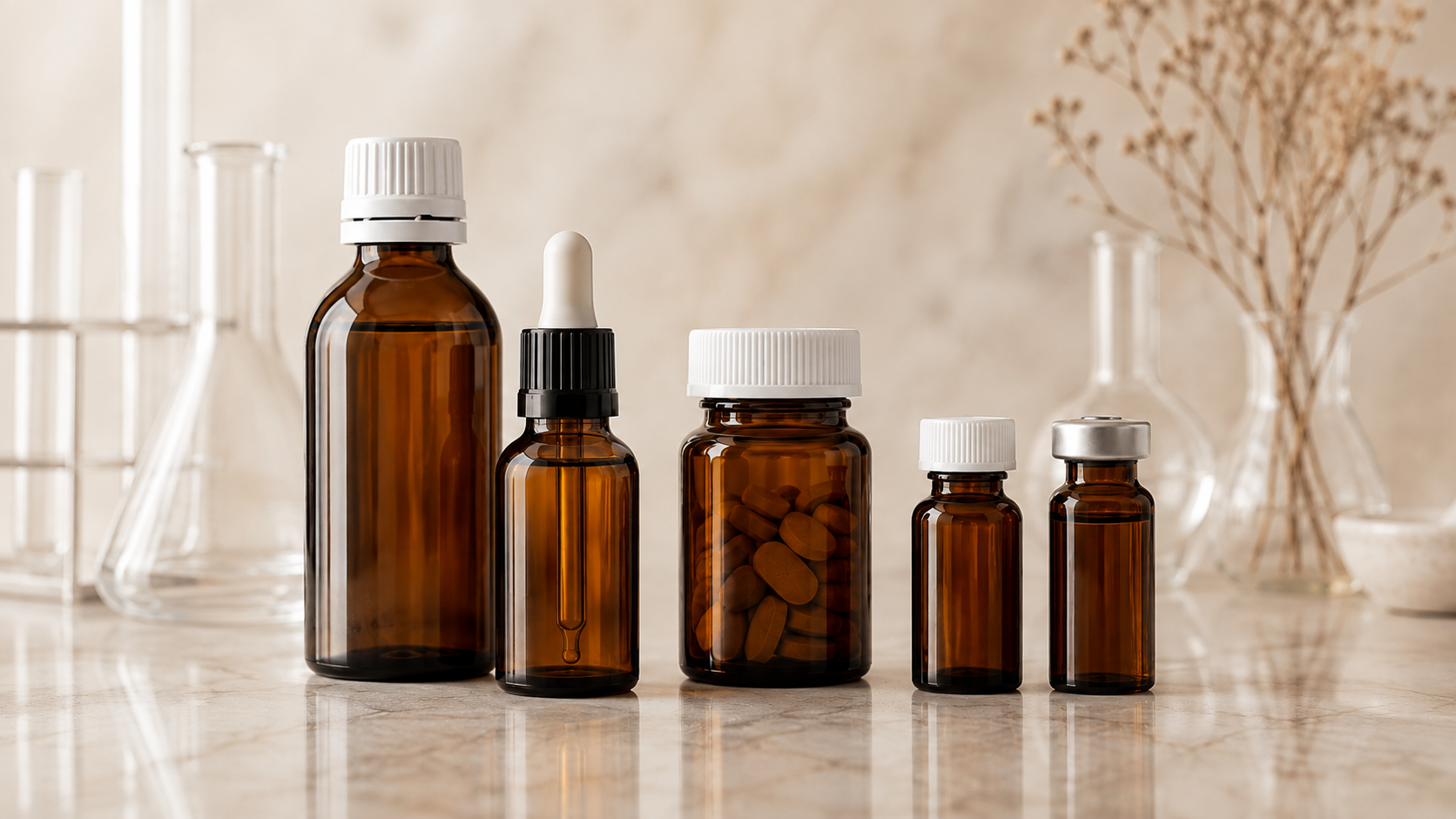
4. They Provide Protection at the Primary-Packaging Level
A major advantage of amber glass bottles is that protection begins at the immediate container.
This matters because a pharmaceutical product may be exposed to light before it enters its final printed carton. Exposure can occur during:
- Filling
- Stoppering or capping
- Visual inspection
- Labelling
- Packaging-line accumulation
- Sampling
- Pharmacy dispensing
- Repeated opening by the user
When the protective function is built into the bottle, the product retains a degree of light protection even when the secondary packaging is absent.
This does not mean cartons, labels, sleeves, or storage conditions become unnecessary. Instead, amber glass bottles create another layer of protection within the overall packaging system.
The FDA treats pharmaceutical packaging as a complete container-closure system rather than viewing each component in isolation. The agency expects the system to be suitable for its intended use and supported by information relating to protection, safety, compatibility, and performance.
This systems-based approach is especially important for light-sensitive formulations because the performance of the bottle must be considered alongside the closure, liner, stopper, seal, dropper, label, carton, and storage instructions.
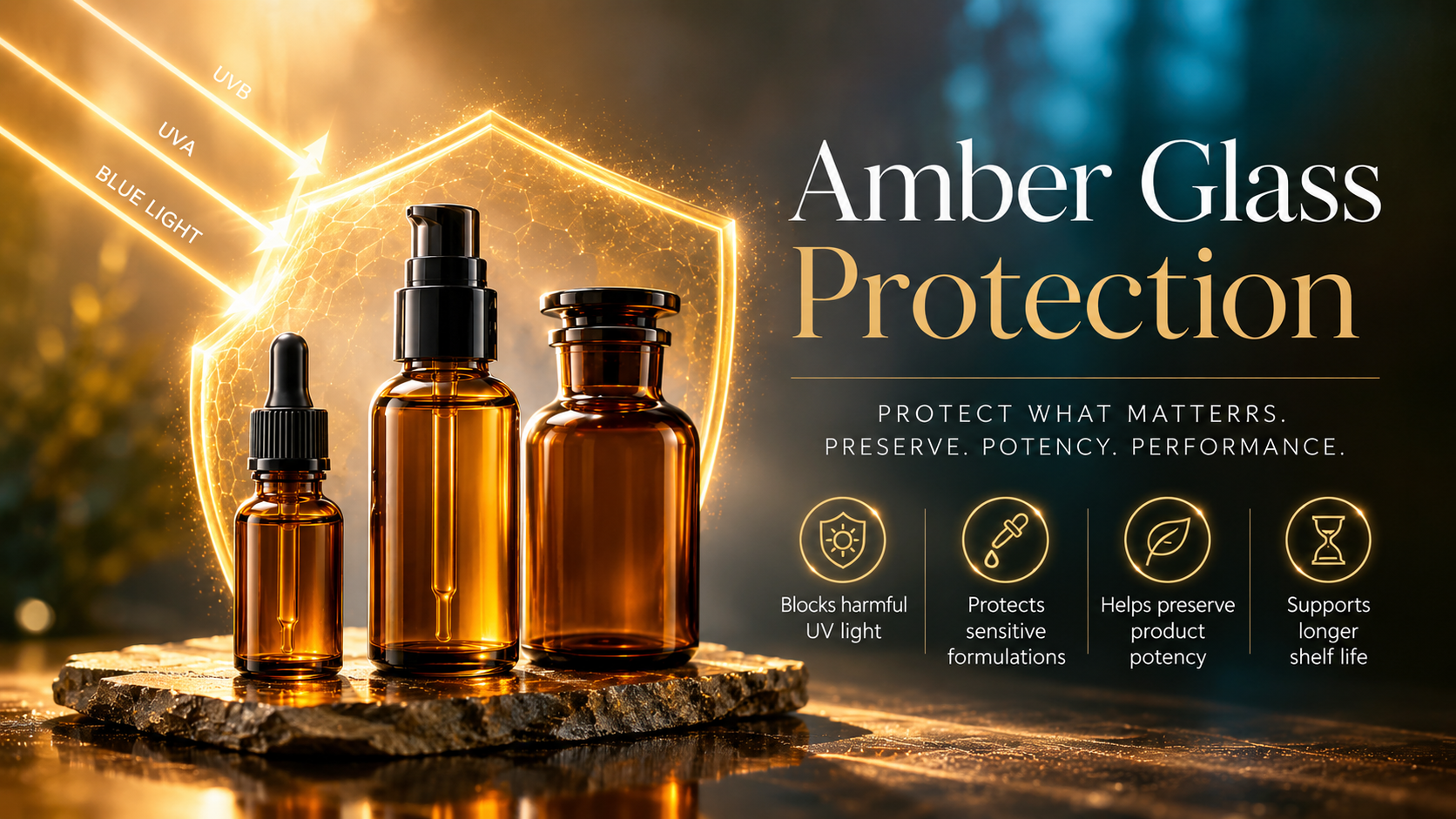
5. They Can Accommodate Multiple Dosage and Dispensing Formats
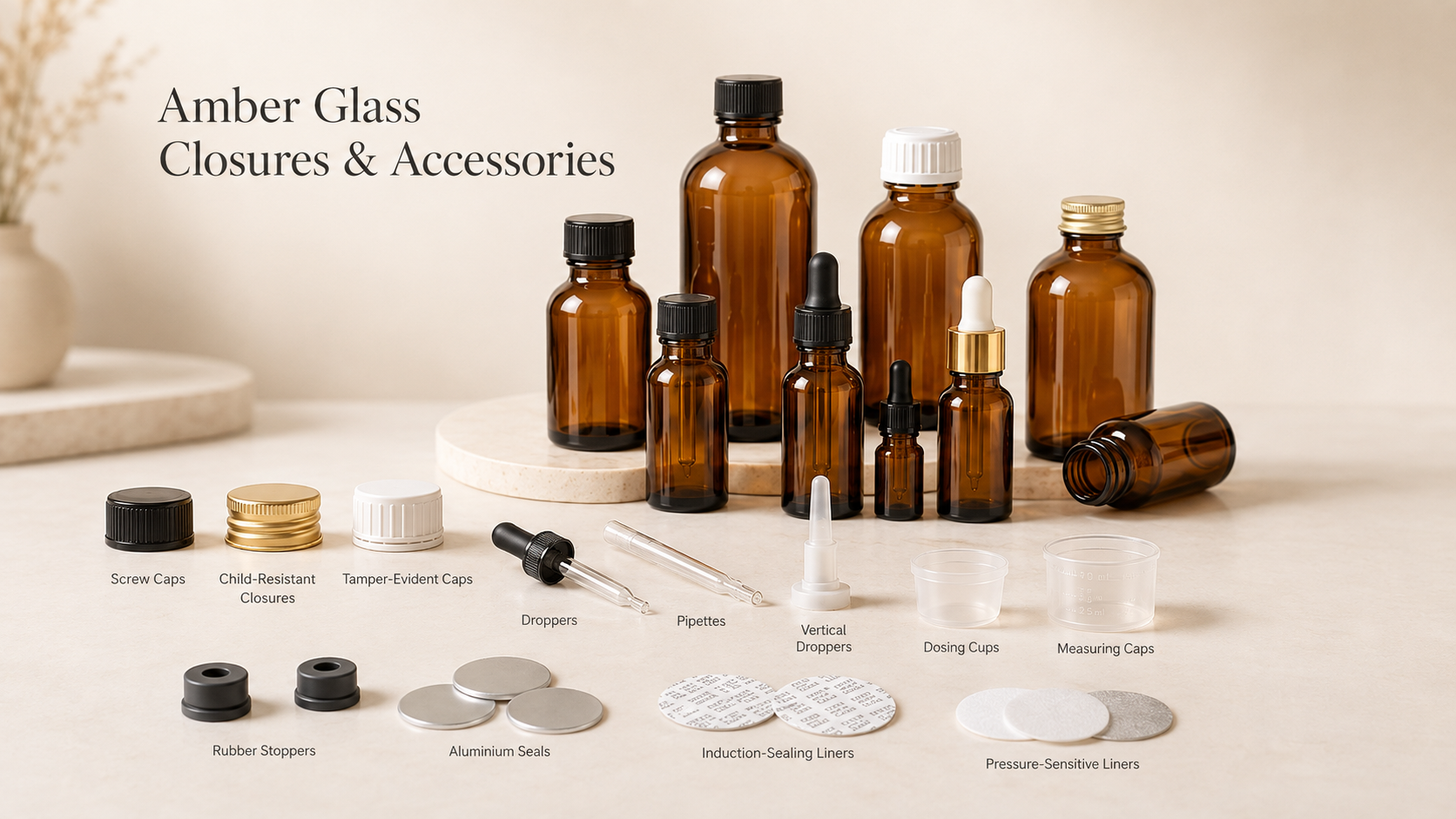
Another commercial benefit of amber glass bottles is their availability across a wide variety of capacities, neck finishes, opening sizes, and dispensing systems.
Depending on the product, the bottle may be combined with:
- Screw caps
- Child-resistant closures
- Tamper-evident caps
- Droppers
- Pipettes
- Vertical droppers
- Dosing cups
- Measuring caps
- Rubber stoppers
- Aluminium seals
- Induction-sealing liners
- Pressure-sensitive liners
This makes amber packaging suitable for numerous pharmaceutical and healthcare applications.
Amber Medicine Bottles
Amber medicine bottles are commonly used for liquid formulations, tablets, capsules, nutraceuticals, and pharmacy preparations.
Important selection criteria include:
- Bottle capacity
- Neck finish
- Closure compatibility
- Label area
- Pouring control
- Dosing requirements
- Tamper evidence
- Child resistance
- Filling-line compatibility
Amber Dropper Bottles
Amber dropper bottles are designed for controlled dispensing of concentrated liquids.
They may be used for:
- Tinctures
- Essential-oil-based preparations
- Laboratory solutions
- Selected ophthalmic products
- Topical formulations
- Wellness concentrates
The complete dropper system requires careful evaluation. Pipette length, bulb material, collar fit, neck dimensions, drop size, graduation accuracy, and chemical compatibility can affect both performance and user experience.
For amber glass bottles fitted with droppers, the dispensing component should never be treated as a decorative accessory. It is a functional part of the packaging system
6. They Can Strengthen Pharmaceutical Brand Trust
Packaging influences how buyers, healthcare professionals, distributors, and end users perceive a pharmaceutical product.
Amber glass bottles are strongly associated with:
- Product protection
- Scientific credibility
- Pharmaceutical heritage
- Stability
- Quality
- Controlled dispensing
- Professional presentation
This visual language can be particularly valuable for OTC medicines, nutraceuticals, botanical formulations, premium wellness products, and specialist healthcare products.
However, credibility should be supported by performance.
A premium-looking package that leaks, delivers inconsistent drops, or creates filling-line problems can quickly damage trust. Therefore, branding decisions should follow technical qualification rather than replace it.
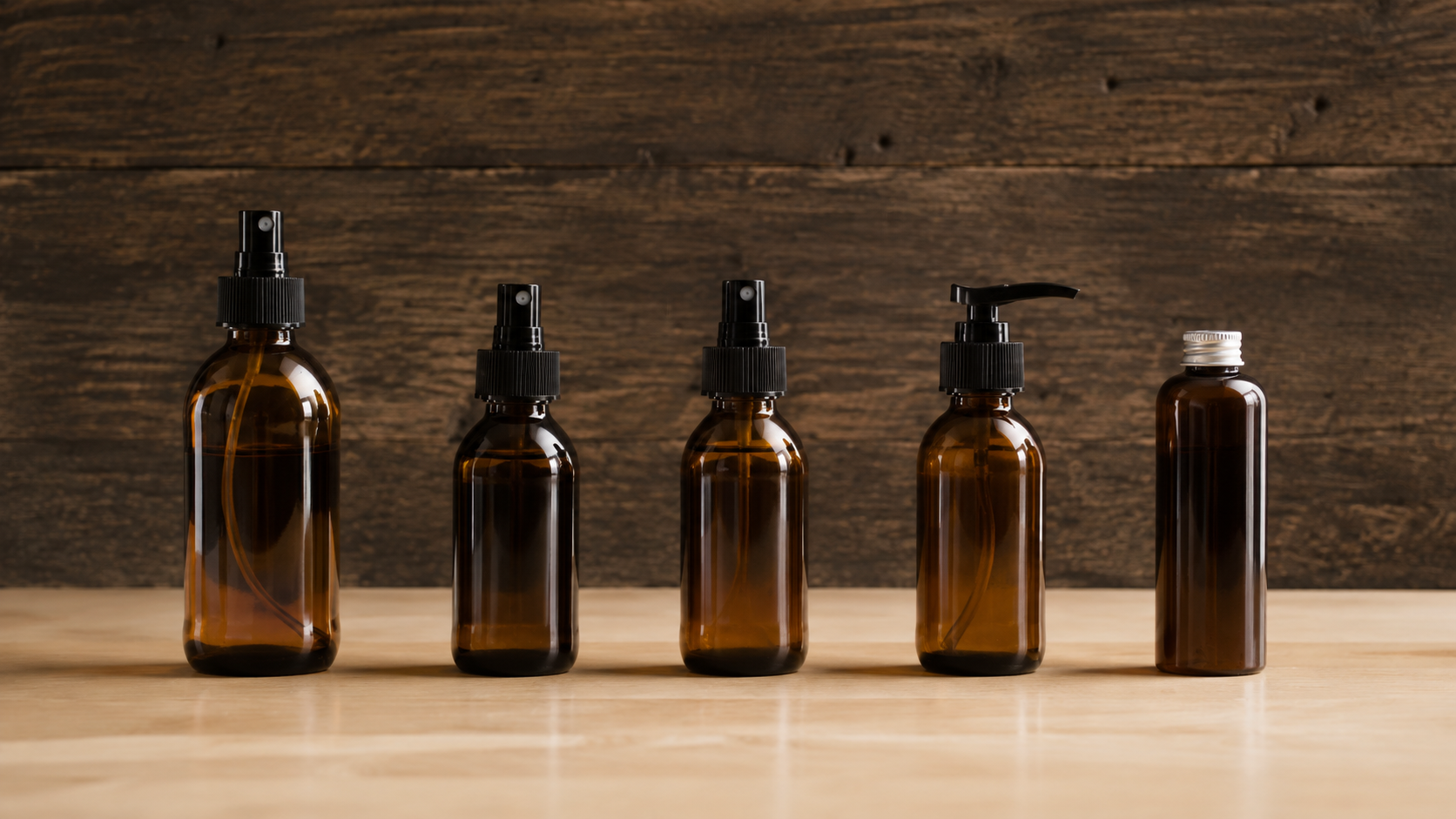
Brands can customise amber glass bottles through:
- Screen printing
- Ceramic printing
- Applied colour labels
- Embossed branding
- Custom closures
- Tamper-evident features
- Printed droppers
- Secondary cartons
- Protective sleeves
The most effective pharmaceutical packaging balances brand differentiation with regulatory readability, manufacturing efficiency, product protection, and supply continuity.
7. They Can Support a Responsible Packaging Strategy
Glass can be recovered and recycled where suitable collection, sorting, and processing infrastructure exists.
However, responsible packaging decisions should consider more than recyclability alone. A full evaluation may include:
- Bottle weight
- Breakage risk
- Transportation distance
- Pallet utilisation
- Secondary packaging
- Recycled-content availability
- Manufacturing losses
- Product wastage
- Local recycling infrastructure
For pharmaceutical products, product protection must remain the priority. Packaging that reduces material use but fails to protect the medicine can create a larger environmental and financial loss through rejected batches, damaged goods, or expired products.
Properly designed amber glass bottles can support sustainability by protecting the product, reducing avoidable wastage, and participating in established glass-recycling systems where these systems are available.
The correct decision should consider the complete lifecycle rather than relying on a single environmental claim.
How to Choose the Right Amber Glass Bottles
Step 1: Understand the Formulation
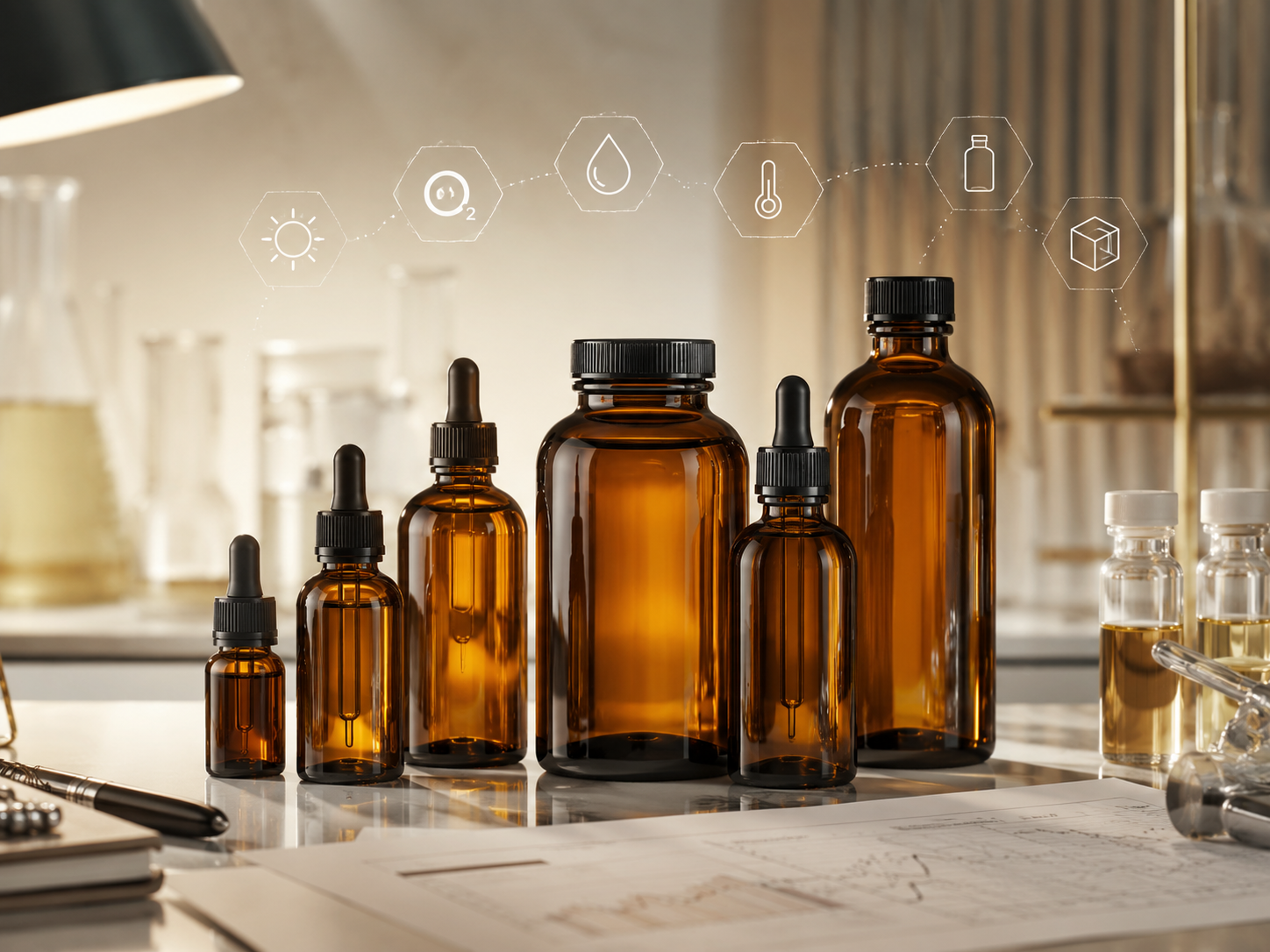
Begin by defining the product’s sensitivity to:
- Light
- Oxygen
- Moisture
- Temperature
- Headspace
- Packaging materials
Review formulation-development data before selecting the container.
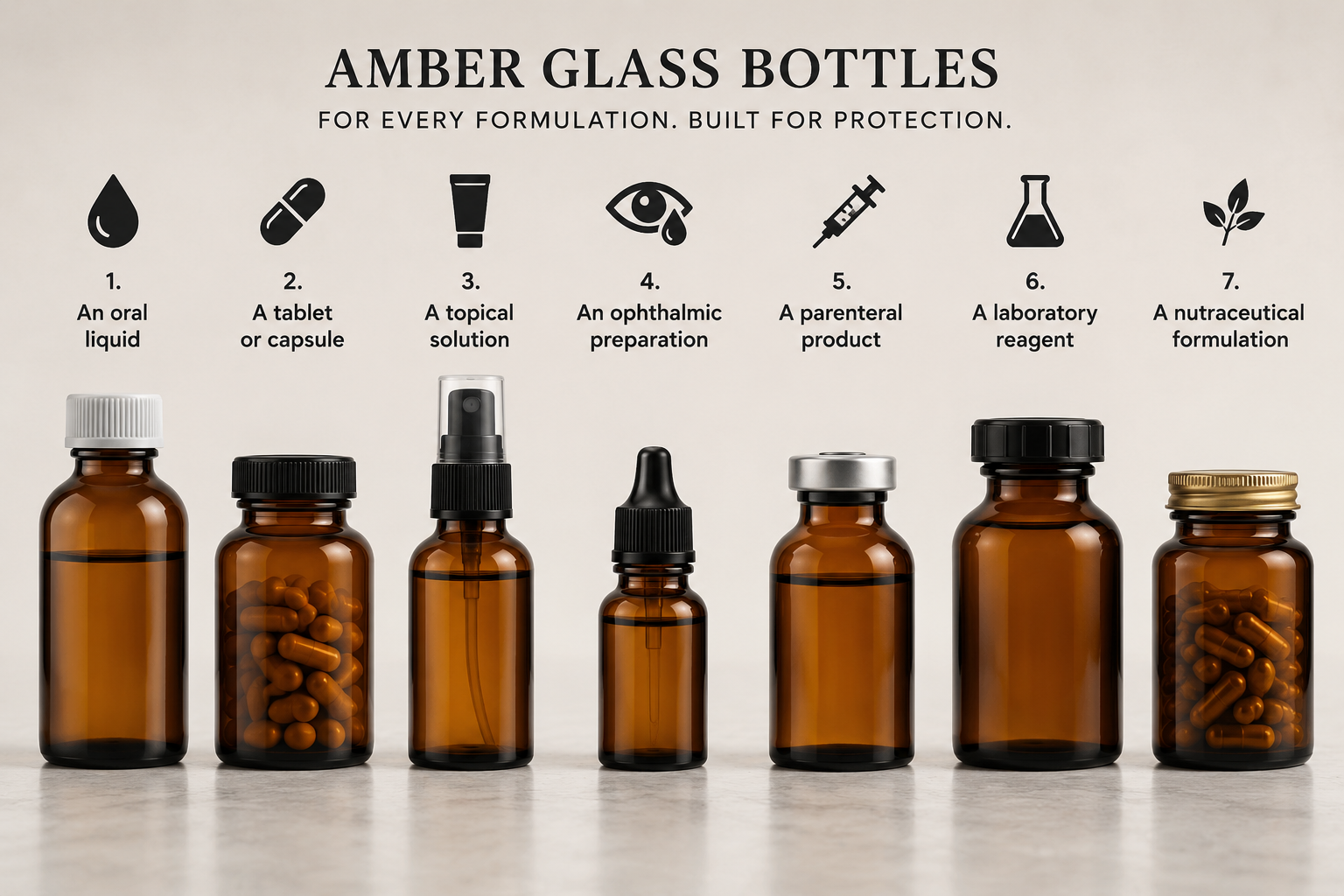
Step 2: Confirm the Dosage Form
Identify whether the product is:
- An oral liquid
- A tablet or capsule
- A topical solution
- An ophthalmic preparation
- A parenteral product
- A laboratory reagent
- A nutraceutical formulation
The dosage form and route of administration influence the glass, closure, testing, and documentation requirements.
Step 3: Determine the Required Glass Performance
Select Type I, Type II, Type III, or another appropriate glass construction based on product requirements and applicable pharmacopoeial expectations.
Do not assume that all pharmaceutical glass bottles provide the same level of hydrolytic resistance.
Step 4: Specify Light-Transmission Requirements
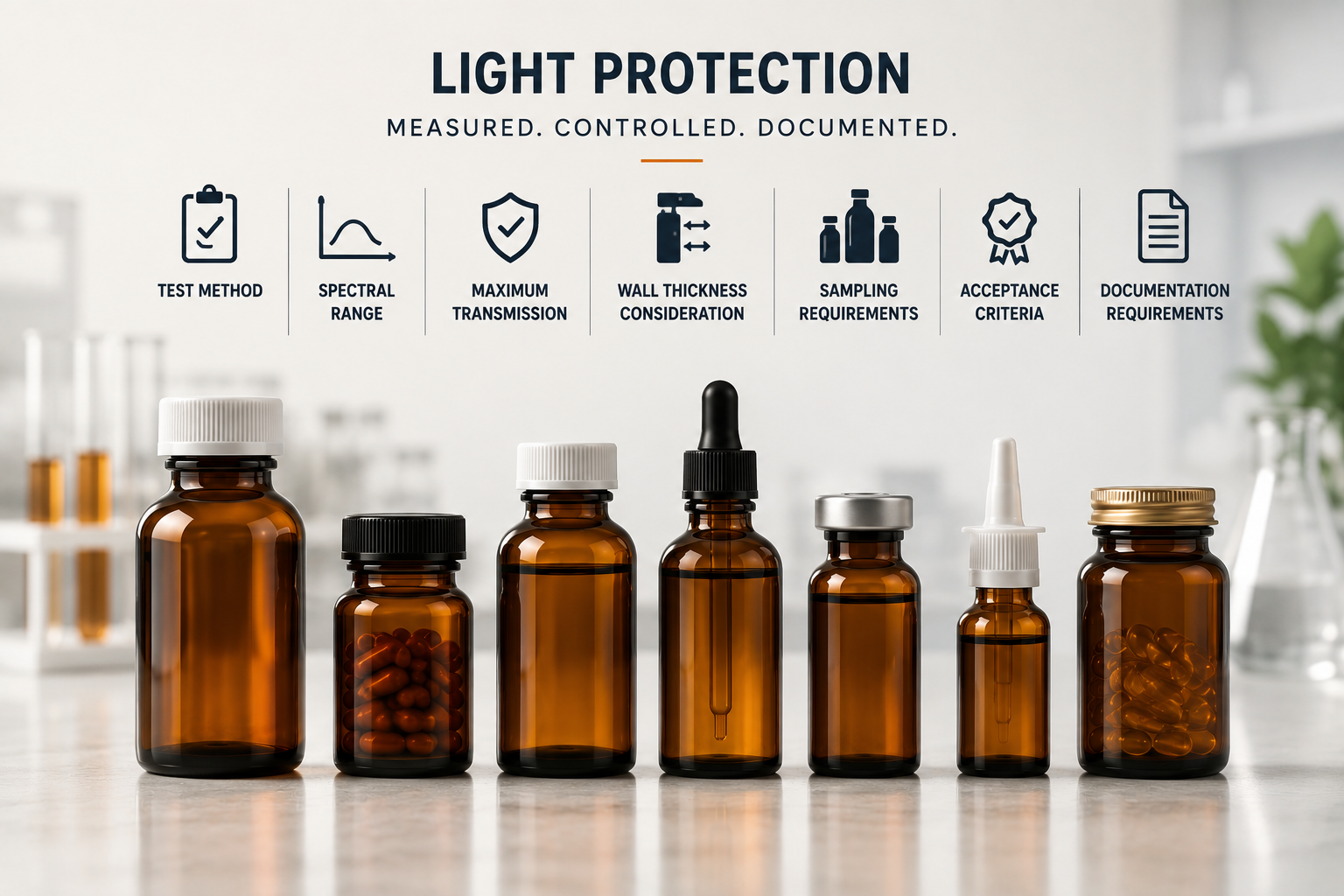
Do not write “amber colour” as the only light-protection requirement.
For qualified amber glass bottles, consider specifying:
- Applicable test method
- Spectral range
- Maximum transmission
- Wall-thickness considerations
- Sampling requirements
- Acceptance criteria
- Documentation requirements
Step 5: Select the Closure With the Bottle
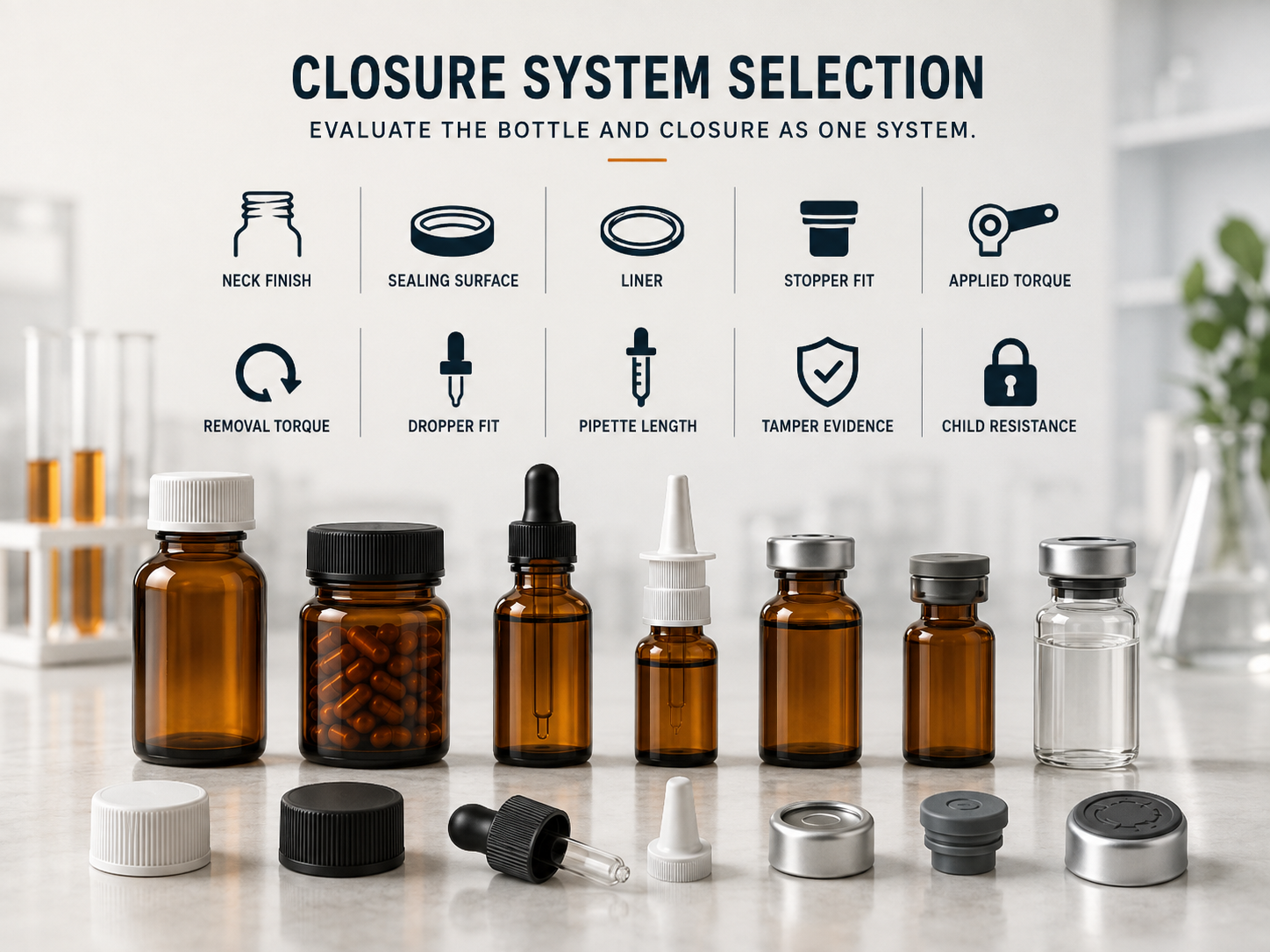
Evaluate the bottle and closure as one system.
Check:
- Neck-finish compatibility
- Sealing surface
- Liner selection
- Stopper fit
- Applied torque
- Removal torque
- Dropper fit
- Pipette length
- Tamper evidence
- Child resistance
Amber Glass Bottles vs Clear Glass Bottles
| Selection Factor | Amber Glass Bottles | Clear Glass Bottles |
| Light protection | Designed to reduce transmission of relevant light wavelengths | Offers limited inherent light protection |
| Product visibility | Lower visibility of the contents | High visibility |
| Common applications | Light-sensitive medicines, tinctures, nutraceuticals and reagents | Products that are not light-sensitive or require visual inspection |
| Branding impression | Scientific, protective and pharmaceutical | Clean, transparent and product-focused |
| Secondary packaging | May still require a carton or label-based protection | Often relies more heavily on secondary light protection |
| Qualification | Requires product-specific testing | Also requires product-specific testing |
Neither option is universally better.
The correct choice depends on the formulation, inspection requirements, stability data, patient use, secondary packaging, and regulatory strategy.
Conclusion
Choosing amber glass bottles requires more than selecting a brown container from a product catalogue.
The right packaging should:
- Reduce relevant light exposure
- Match the formulation
- Provide appropriate hydrolytic resistance
- Work with the chosen closure
- Perform consistently on the filling line
- Support accurate dispensing
- Maintain product quality throughout shelf life
The costly mistakes usually occur when brands select packaging based only on appearance, capacity, or unit price.
A lower-priced bottle can become expensive if it creates leakage, line stoppages, product degradation, customer complaints, or the need to repeat stability studies.
The most reliable approach is to evaluate amber glass bottles as part of a complete container-closure and product-protection system. At Ajanta Bottle, we help you choose the right bottle by evaluating your product formulation, dosage form, required glass performance, light protection, and closure compatibility. This structured approach helps ensure your packaging choice is suitable, reliable, and aligned with your product requirements.
Ajanta Bottle supports pharmaceutical, nutraceutical, healthcare, and wellness brands with pharmaceutical glass bottles, amber medicine bottles, amber dropper bottles, compatible closures, dispensing systems, decoration options, and packaging machinery.
Ajanta Bottle: 45 Years of Packaging That Builds India’s Shelf Presence
With over 44 years of legacy in the Indian packaging industry, Ajanta Bottle has become more than just a packaging supplier it is a trusted partner to brands looking to scale, differentiate, and lead through design.
From the early days of supplying classic glass containers for pharmaceuticals and household staples to now providing premium glass jars, lightweight bottles, and customized aluminum cans for food and beverage businesses, Ajanta has stayed ahead by understanding what packaging really means in a competitive market.
We have worked with countless Indian brands, both legacy and new-age, helping them:
Launch shelf-ready products with strong first-impression value
Shift from plastic to glass to enhance sustainability and consumer trust
Integrate packaging design with brand stories for premium perception
Optimize for retail stocking, e-commerce delivery, and food service convenience
Our in-house decoration unit, innovative packaging machinery under Akikai, and continuous investment in research and customer education (through platforms like PackSchool) make us uniquely placed to support packaging transformations that matter.
Whether it’s a cold-pressed juice in a sleek amber glass bottle or a handcrafted pickle in a heritage-inspired jar, Ajanta Bottle enables food and beverage brands to lead with packaging that speaks louder than words.
We don’t just supply containers.
We build packaging stories that sell.
Ready to create the perfect glass packaging for your brand?
Connect with us:
● Email at sales@ajantabottle.com
● Phone/Whatsapp: +91 9891098918
You can also shop from more than 500+ packaging solutions on www.ajantabottle.com – India’s first ever comprehensive packaging e-commerce portal.
For additional information, browse through our blog at https://www.ajantabottle.com/public/blog/ or subscribe to our latest updates through our social media channels,
*YouTube channel: https://www.youtube.com/c/Ajantabottle
*LinkedIn Page: https://www.linkedin.com/company/ajantabottle
*Facebook Page: https://www.facebook.com/glassbottleindia
*Instagram Page: https://www.instagram.com/ajantabottle
*Google Business Profile Manager: https://g.page/r/CXTH9MKpe2DuEBM/review