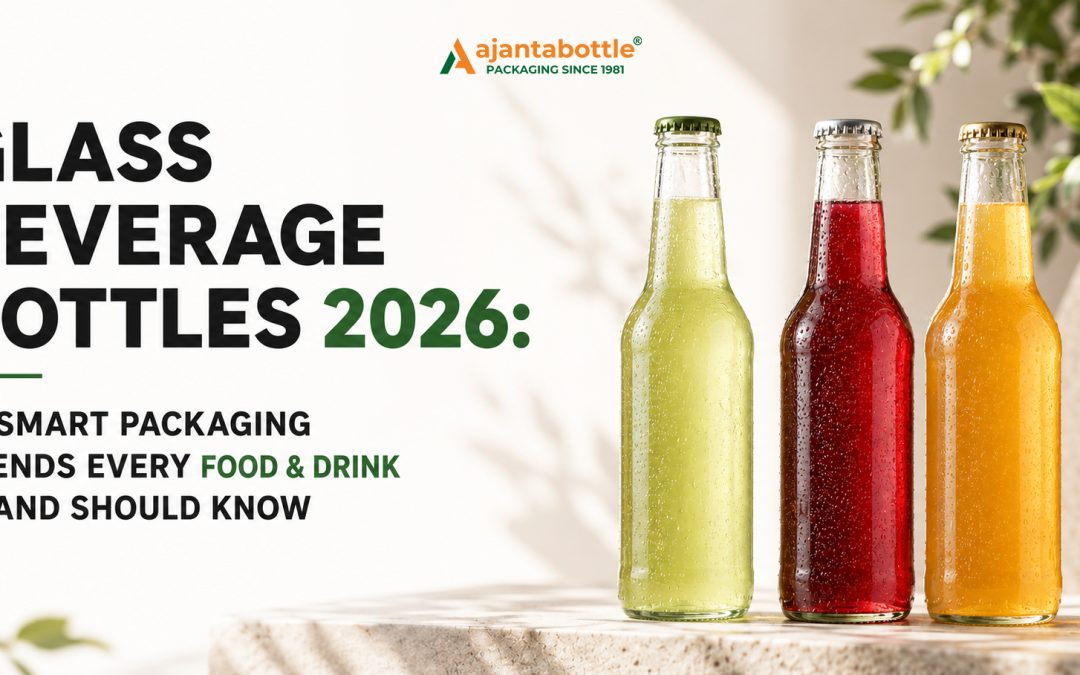
The most relevant glass beverage bottles trends shaping 2026 include lightweight glass, refill and return systems, stronger closure compatibility, premium stock-bottle customisation, production-friendly shapes, improved e-commerce durability, smarter size architecture, and packaging decisions designed around regulation, logistics, and long-term portfolio growth.
These developments show that glass beverage bottles are no longer selected only according to capacity and price. For beverage brands, the bottle has become a commercial tool that influences product protection, shelf presence, perceived quality, transport efficiency, filling performance, and customer recognition.
Why Glass Beverage Bottles Matter More in 2026
Beverage packaging is carrying more responsibility than before. A bottle must protect the formulation, communicate the intended price point, perform on a production line, remain stable during transport, and look recognisable in both physical retail and digital content.
At the same time, brands are launching more functional drinks, premium mixers, cold coffee, flavoured water, dairy beverages, juices, kombucha, craft sodas, syrups, and private-label beverage ranges. This increases the need for glass beverage bottles that are flexible enough for commercial production but distinctive enough to support strong positioning.
This does not mean every company needs the lightest or most complex bottle. It means glass beverage bottles should be selected according to the complete business model, including product formulation, filling method, order volume, supply chain, branding, target market, and expected future scale.
Lightweight Glass Moves From Sustainability Claim to Commercial Strategy
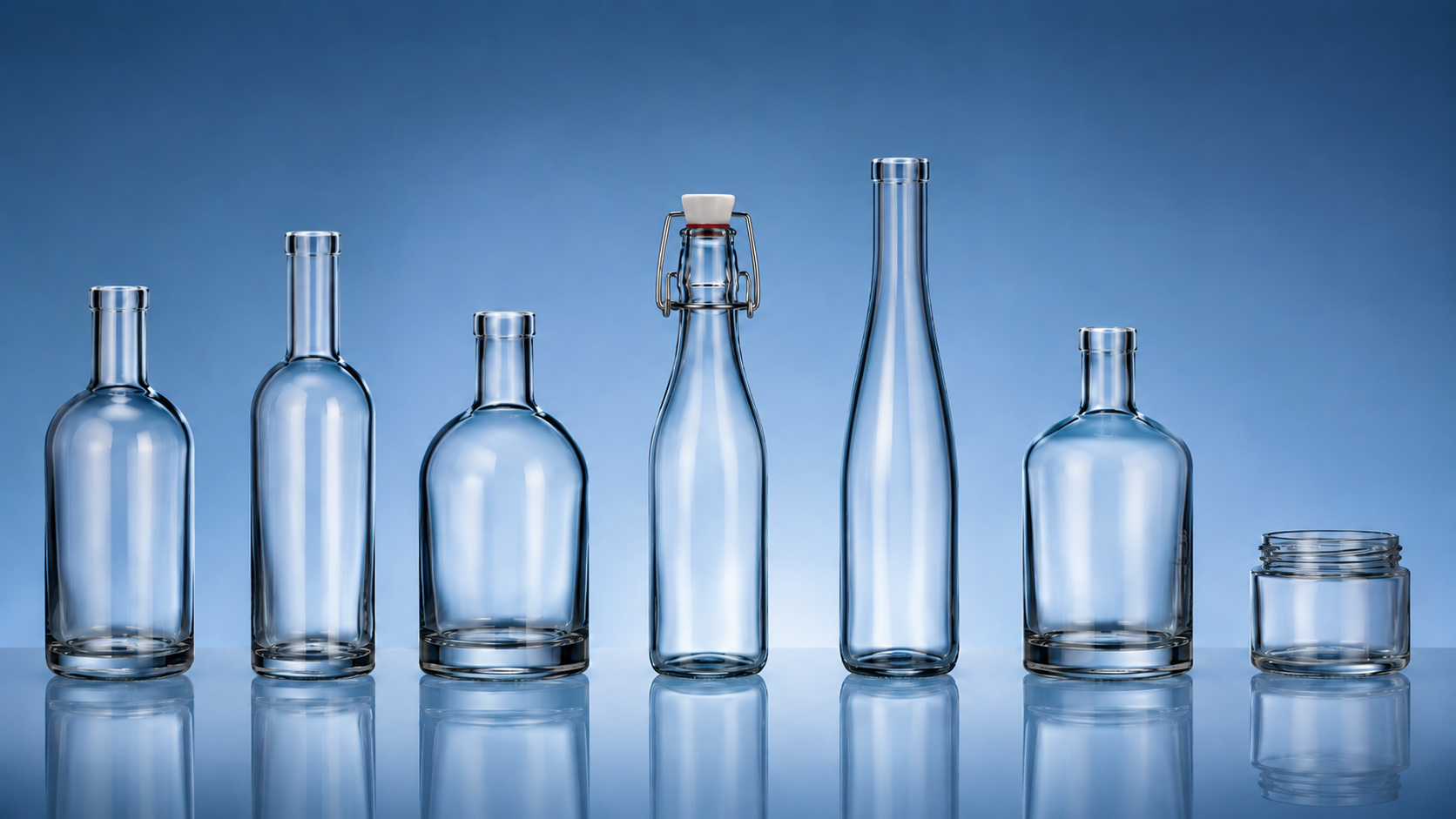
One of the most important developments in glass beverage bottles is the move toward right-weighting. The goal is not simply to make bottles thinner. It is to remove unnecessary material while maintaining the strength, proportions, clarity, stability, and premium appearance required for the application.
A well-engineered lightweight bottle can support:
- Lower transport weight
- More efficient pallet utilisation
- Easier warehouse handling
- Reduced material consumption
- Potentially lower freight exposure for export orders
- A more contemporary sustainability story
This is particularly relevant for businesses purchasing glass bottles wholesale or sourcing glass bottles for beverages at scale, where small reductions in unit weight can become meaningful across high-volume orders. Lightweight glass bottles can also improve freight efficiency when the design remains fit for purpose.
However, lightweight glass should never be selected only from a specification sheet. Bottle geometry, wall distribution, base design, impact resistance, filling-line pressure, stacking conditions, carbonation level, and secondary packaging can all influence real-world performance.
The strongest glass beverage bottles balance material efficiency with the durability needed for production and distribution. Premium beverage packaging should communicate quality through shape, finish, proportion, and precision rather than unnecessary weight alone.
Reusable and Returnable Bottles Become More Relevant for the Right Business Models
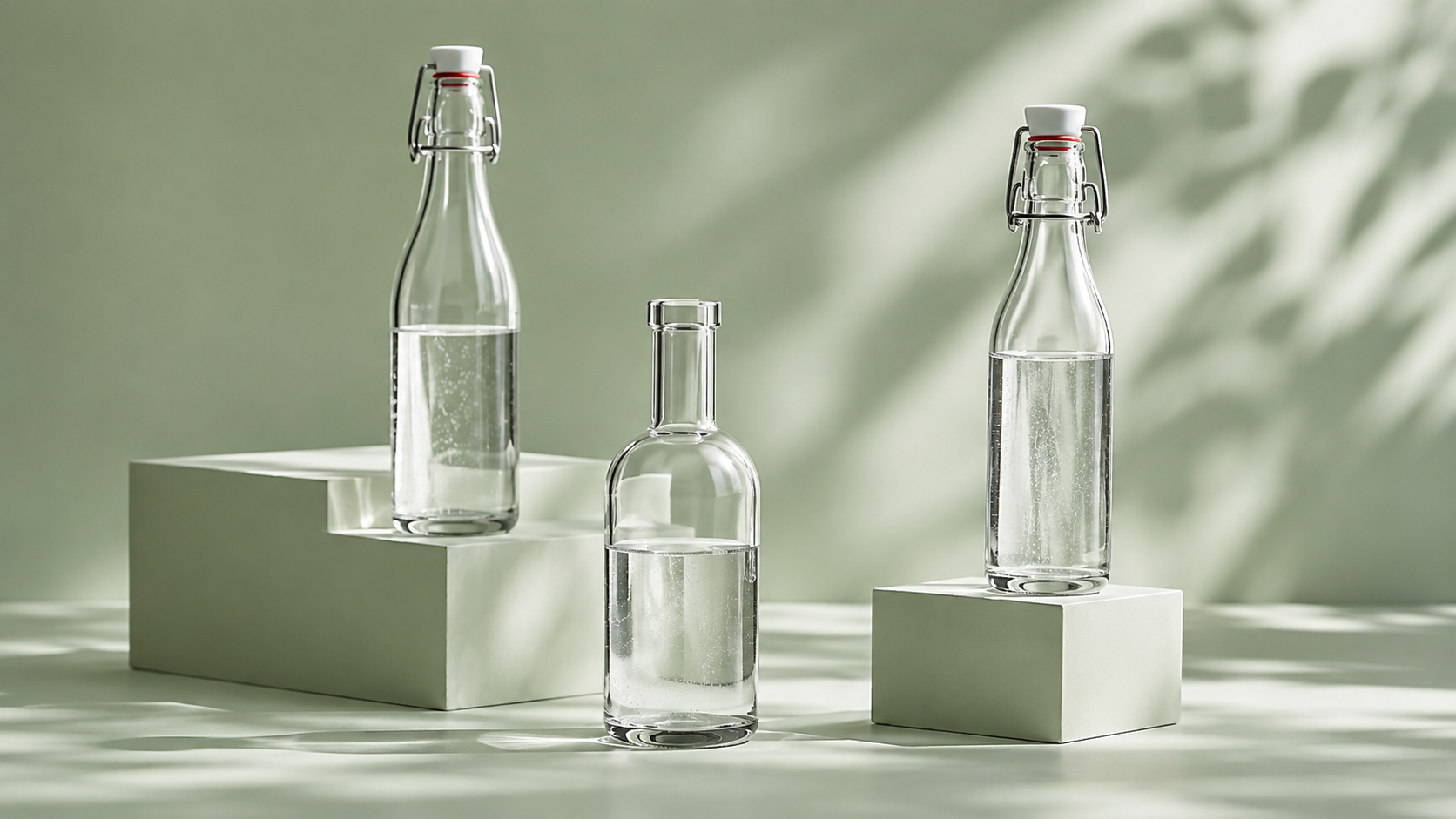
Reuse is becoming a more serious packaging consideration, especially for local distribution, hospitality, institutional supply, dairy routes, water delivery, and controlled beverage networks.
Reusable glass bottles can create value when a brand has the infrastructure to collect, sort, inspect, wash, refill, and redistribute packaging efficiently. In the right system, the original container can complete multiple use cycles before entering recycling.
For returnable glass beverage bottles, brands should evaluate:
- Bottle durability across repeated handling
- Scuffing and decoration resistance
- Wash-cycle compatibility
- Closure replacement requirements
- Bottle identification and sorting
- Crate and transport efficiency
- Return logistics
- Quality-control procedures before refilling
The commercial model matters as much as the bottle. A reusable format may work well for a regional dairy or hospitality network but may be inefficient for a brand shipping low volumes across widely dispersed locations.
For this reason, glass beverage bottles should support the distribution system rather than force the business into an impractical return model. Reuse is strongest when packaging, logistics, customer behaviour, and operational capacity are developed together.
Stock Bottles Gain More Brand Value Through Strategic Customisation
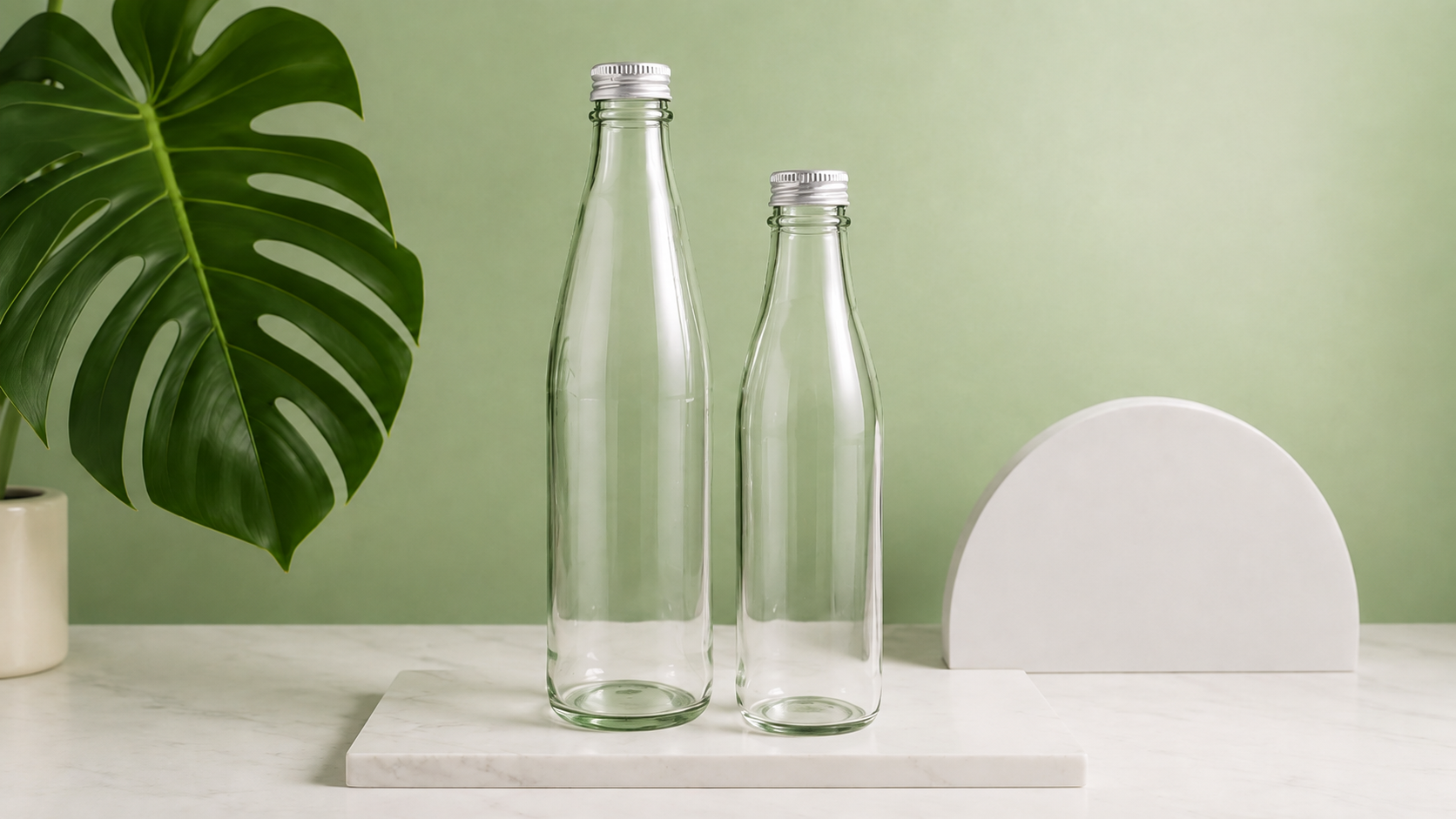
Not every beverage launch requires a custom mould. For many growing brands, stock glass beverage bottles provide a faster and more commercially manageable route to market.
A standard bottle can be made more distinctive through:
- Custom labels
- Screen printing
- Colour coating
- Frosting
- Ceramic or durable print effects
- Embossed accessories where compatible
- Premium metal or plastic caps
- Custom neck sleeves
- Tamper-evident features
- Coordinated cartons and multipacks
This approach can reduce mould-development investment, shorten launch timelines, and allow brands to test new products before committing to a proprietary bottle. For fast-moving launches, stock glass beverage bottles can also make repeat sourcing easier to plan.
It is especially suitable for private-label beverages, craft soda companies, premium juices, mixers, cold coffee brands, gifting ranges, seasonal launches, and regional manufacturers.
Custom glass bottles can offer stronger exclusivity, but they also require technical development, mould investment, larger production planning, and longer lead times.
For many companies, the smarter response to current glass beverage bottles trends is to build a recognisable packaging identity around a commercially available shape and use decoration, closure choice, colour, and secondary packaging to create differentiation.
Distinctive Bottle Shapes Become More Production-Friendly
Shelf differentiation still matters, but highly complex bottle forms can create operational problems during filling, labelling, packing, case handling, and transport.
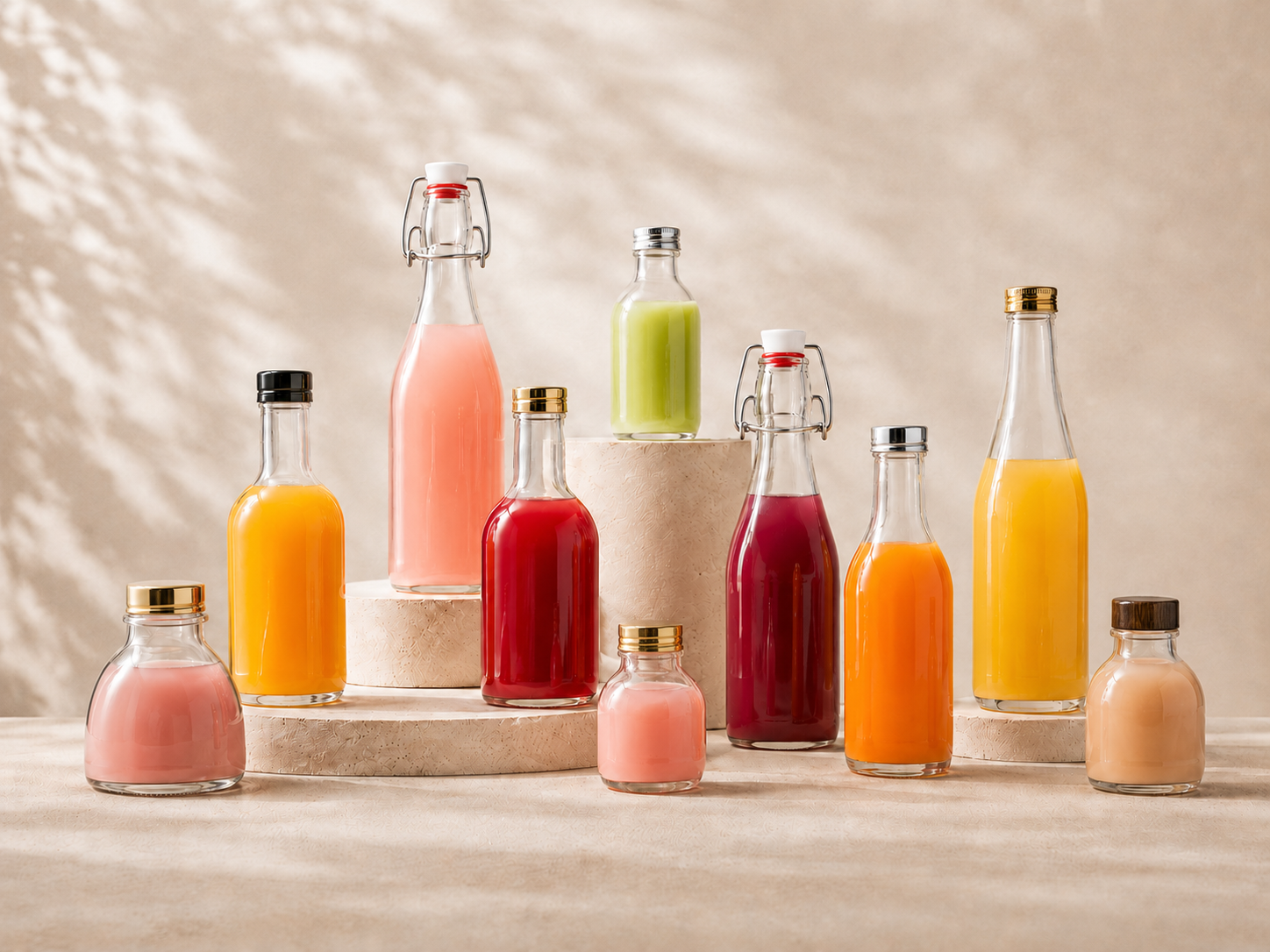
As a result, practical glass beverage bottles increasingly use shapes that are visually recognisable without becoming difficult to manufacture or run on standard equipment.
Useful design directions may include:
- Clean cylindrical bottles
- Soft square profiles
- Rounded rectangular shapes
- Long-neck beverage bottles
- Compact premium formats
- Wide front panels for branding
- Subtle shoulder differentiation
- Distinctive but stable bases
Before choosing an unusual bottle, beverage companies should examine line speed, conveyor stability, label application, rinser and filler compatibility, capper requirements, carton dimensions, divider requirements, pallet efficiency, and shipping stability.
A strong design should also provide enough branding area for regulatory declarations, nutritional information, barcodes, batch details, and front-facing communication. Well-proportioned glass beverage bottles can help brands balance mandatory information with a cleaner front-of-pack identity.
The most commercially effective glass beverage bottles create visual identity while remaining easy to fill, decorate, pack, stack, transport, and reorder.
Smaller Premium Formats Create New Sampling and Occasion Opportunities
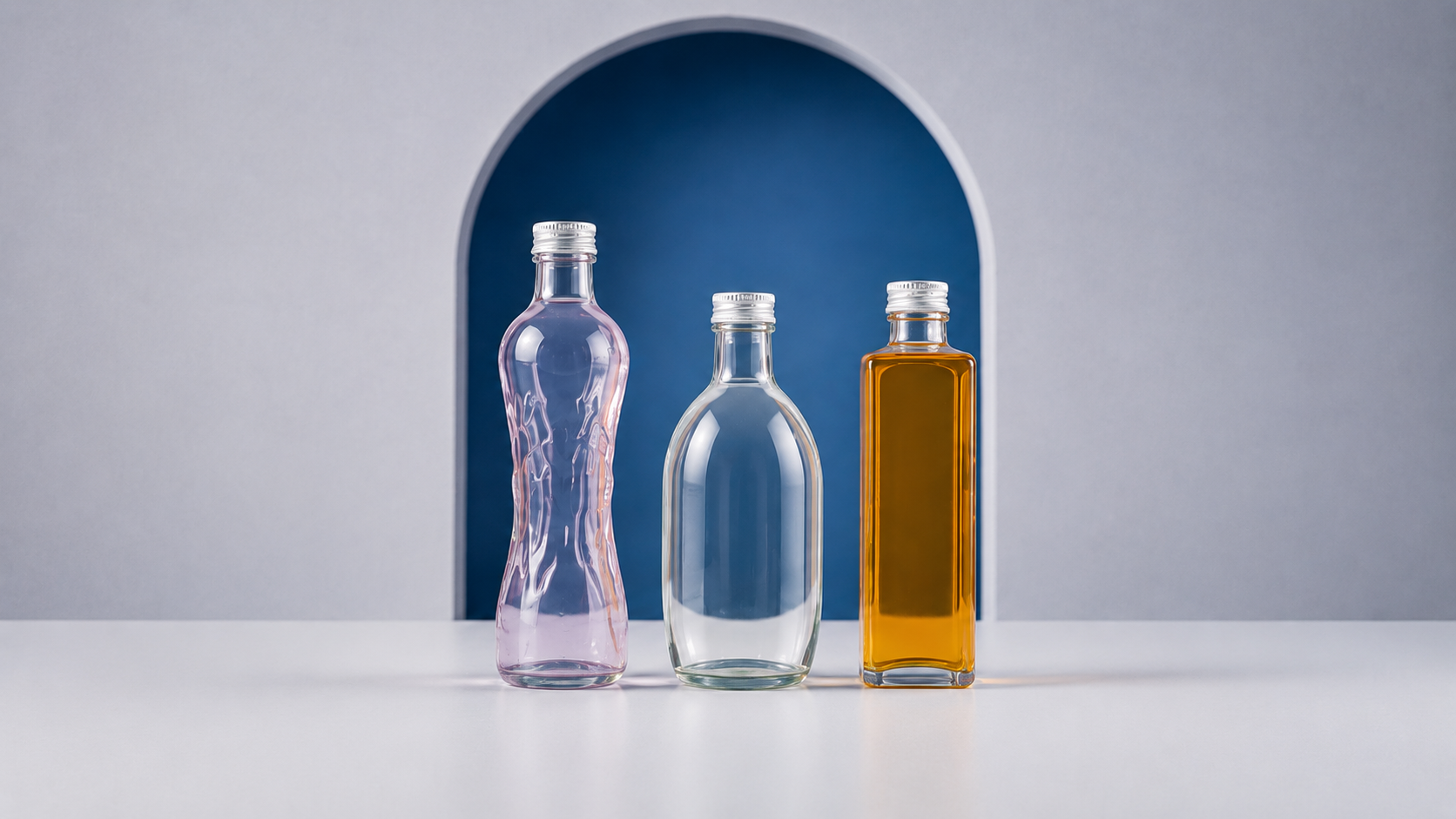
Smaller beverage formats are becoming useful commercial tools rather than simple trial packs. Functional shots, premium mixers, wellness drinks, juice portions, mini cold coffees, tasting formats, gifting sets, and hotel or airline servings can all benefit from compact glass beverage bottles.
When glass beverage bottles are used for compact formats, they can open new trial and occasion-based opportunities. Small formats can help brands:
- Introduce higher-value formulations at a lower trial price
- Create tasting or discovery packs
- Develop event and gifting assortments
- Control serving sizes
- Build multi-flavour bundles
- Enter hospitality and travel channels
- Support premium positioning through concentrated presentation
However, a smaller bottle does not automatically reduce packaging complexity. The neck finish, fill accuracy, headspace, label area, closure size, and secondary packaging must still be suitable for the product.
For functional or concentrated beverages, dosing expectations may also affect the pack design. Brands should make sure the intended serving quantity is clear and operationally repeatable.
Well-designed glass beverage bottles in smaller capacities can extend a product range without requiring the brand to compromise its visual identity.
Closures and Neck Finishes Become Part of the Brand System
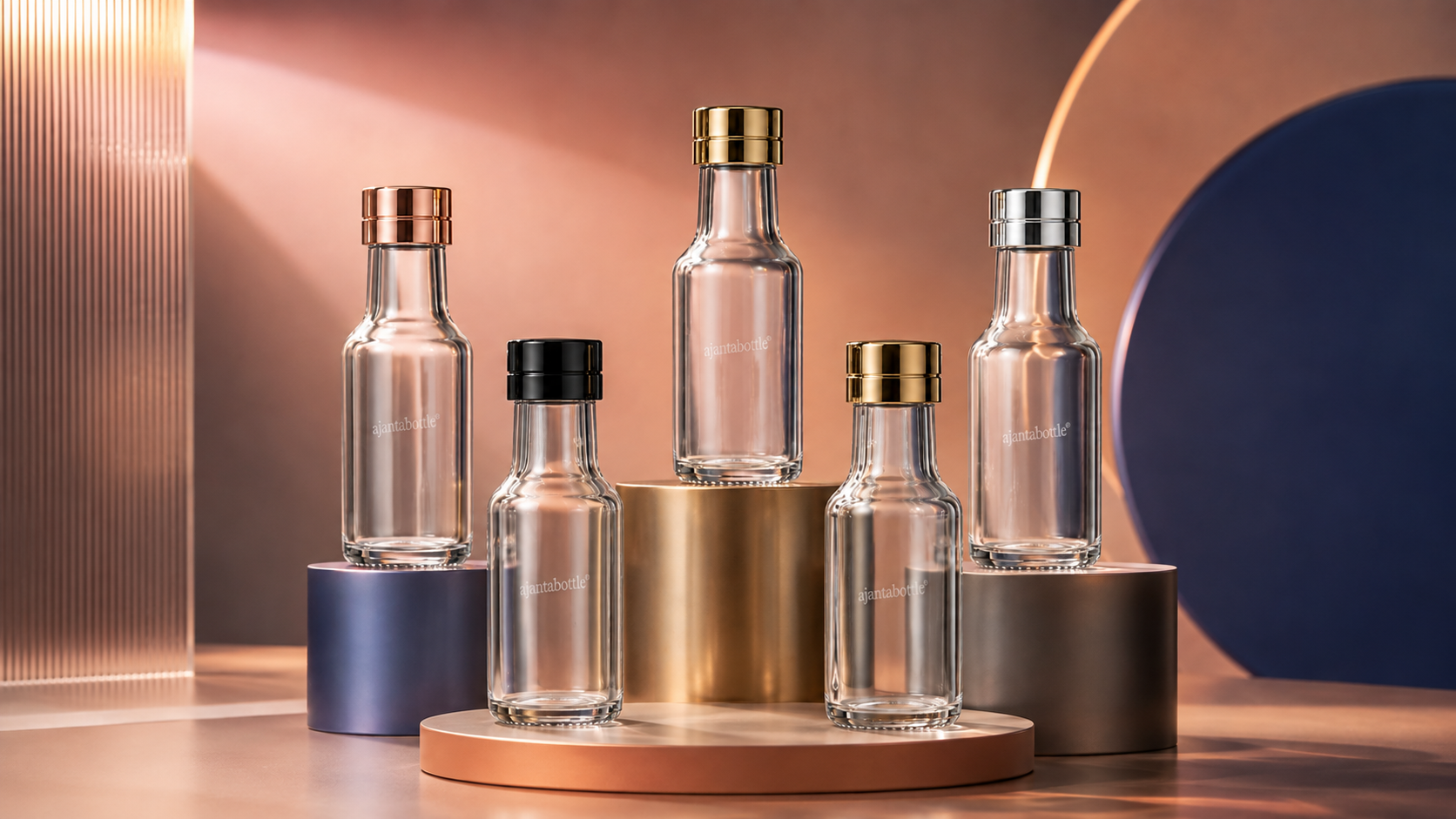
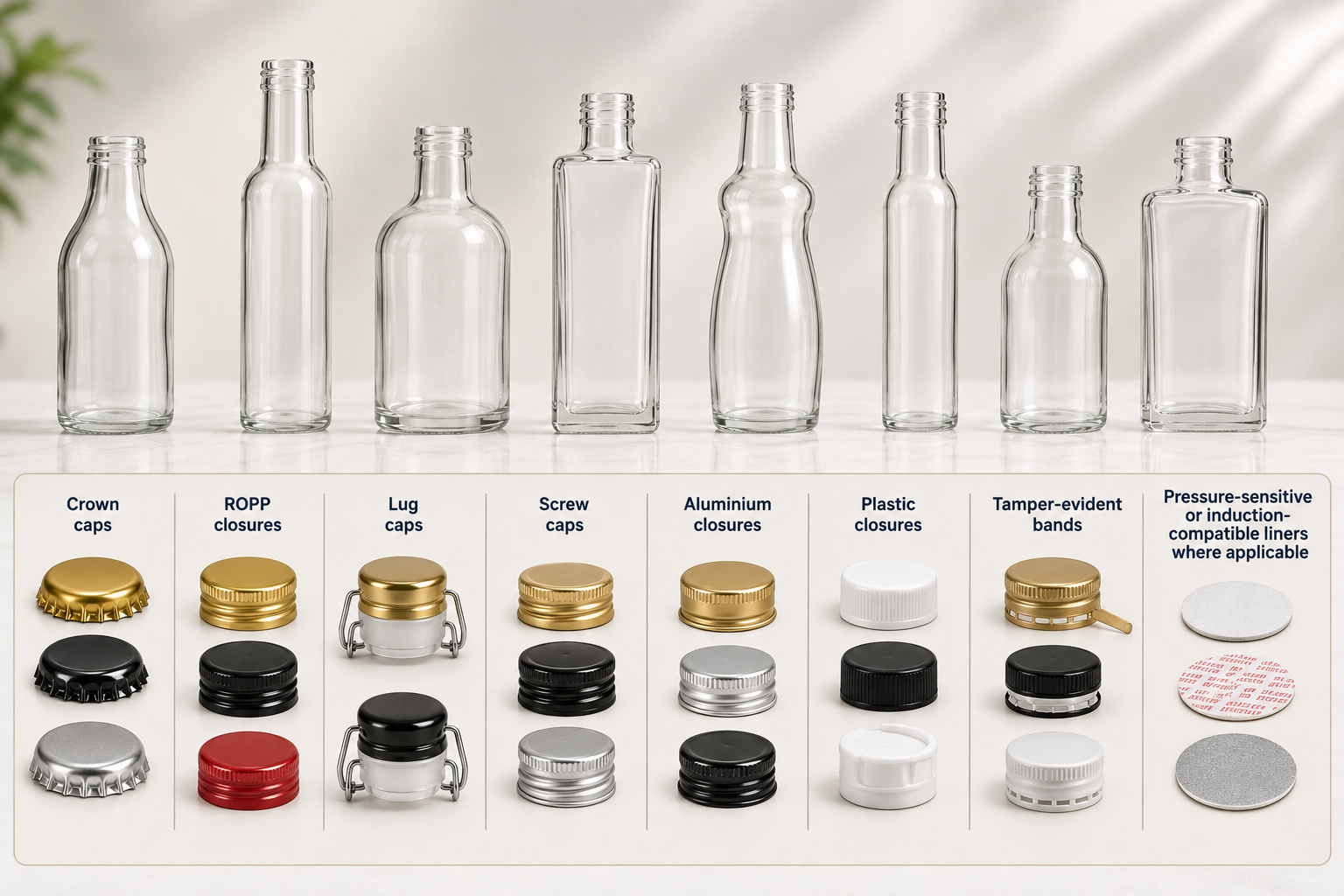
A bottle cannot perform independently from its closure. One of the most practical changes in beverage packaging development is the greater attention being given to the bottle, neck finish, cap, liner, tamper evidence, and filling process as one system.
Depending on the beverage, glass beverage bottles may be paired with:
- Crown caps
- ROPP closures
- Lug caps
- Screw caps
- Aluminium closures
- Plastic closures
- Tamper-evident bands
- Pressure-sensitive or induction-compatible liners where applicable
The correct closure should provide reliable sealing while supporting the expected opening experience, storage conditions, distribution route, and brand positioning. For glass beverage bottles, closure selection should therefore be confirmed as part of the complete pack, not as a final accessory decision.
For carbonated drinks, pressure performance becomes critical. For juices, dairy beverages, syrups, and other products, sealing requirements can be influenced by the filling process, product chemistry, storage temperature, and expected shelf life.
Brands sourcing glass beverage bottles wholesale should confirm neck finish, closure dimensions, liner compatibility, application torque, capper settings, and leakage performance before full production.
A premium-looking cap that does not seal consistently can create complaints, returns, and avoidable loss. Packaging aesthetics and technical compatibility should always be developed together.
Filling and Thermal Requirements Move Earlier in Bottle Selection
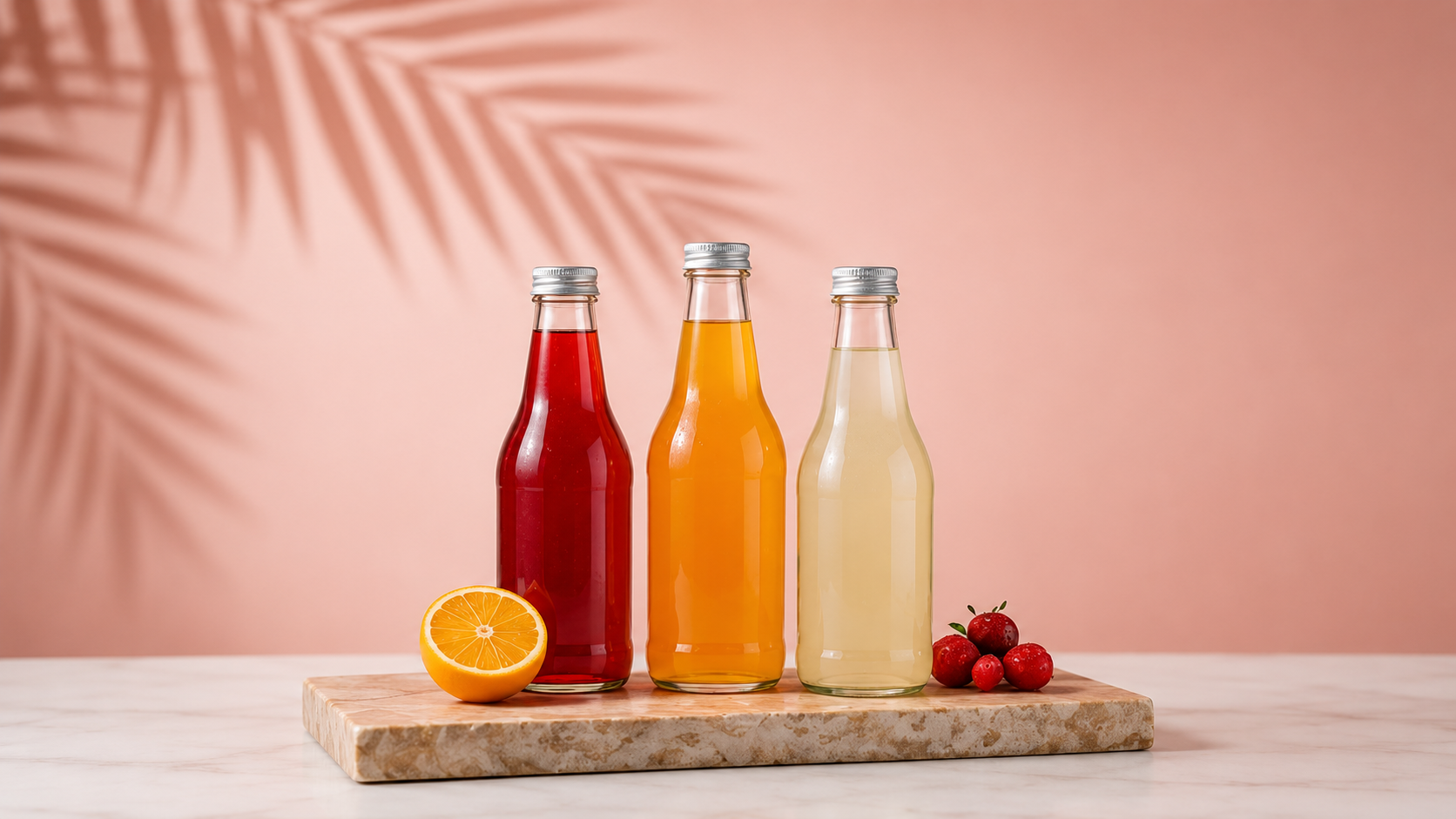
One of the most expensive packaging mistakes is selecting a bottle visually and checking production compatibility later. Different beverages create different technical demands, which means glass beverage bottles should be evaluated against the actual filling process from the beginning.
Brands should define whether the product involves:
- Cold filling
- Hot filling
- Carbonation
- Pasteurisation
- Pressure changes
- Viscous formulations
- Particulate ingredients
- Refrigerated distribution
- Ambient storage
Testing glass beverage bottles against the intended process early can reduce costly line changes later. The filling-line setup can also influence bottle choice. Rinser handling, conveyor guides, filling nozzles, capper heads, label machines, inspection systems, and case packers may all have dimensional or stability requirements.
For glass juice bottles, soda glass bottles, glass water bottles, milk bottles, and speciality beverages, the correct container should be confirmed through application-specific testing rather than assumption.
The best glass beverage bottles protect the product while integrating smoothly with the equipment used to fill, close, inspect, label, and pack them.
E-Commerce and Long-Distance Distribution Influence Bottle Design
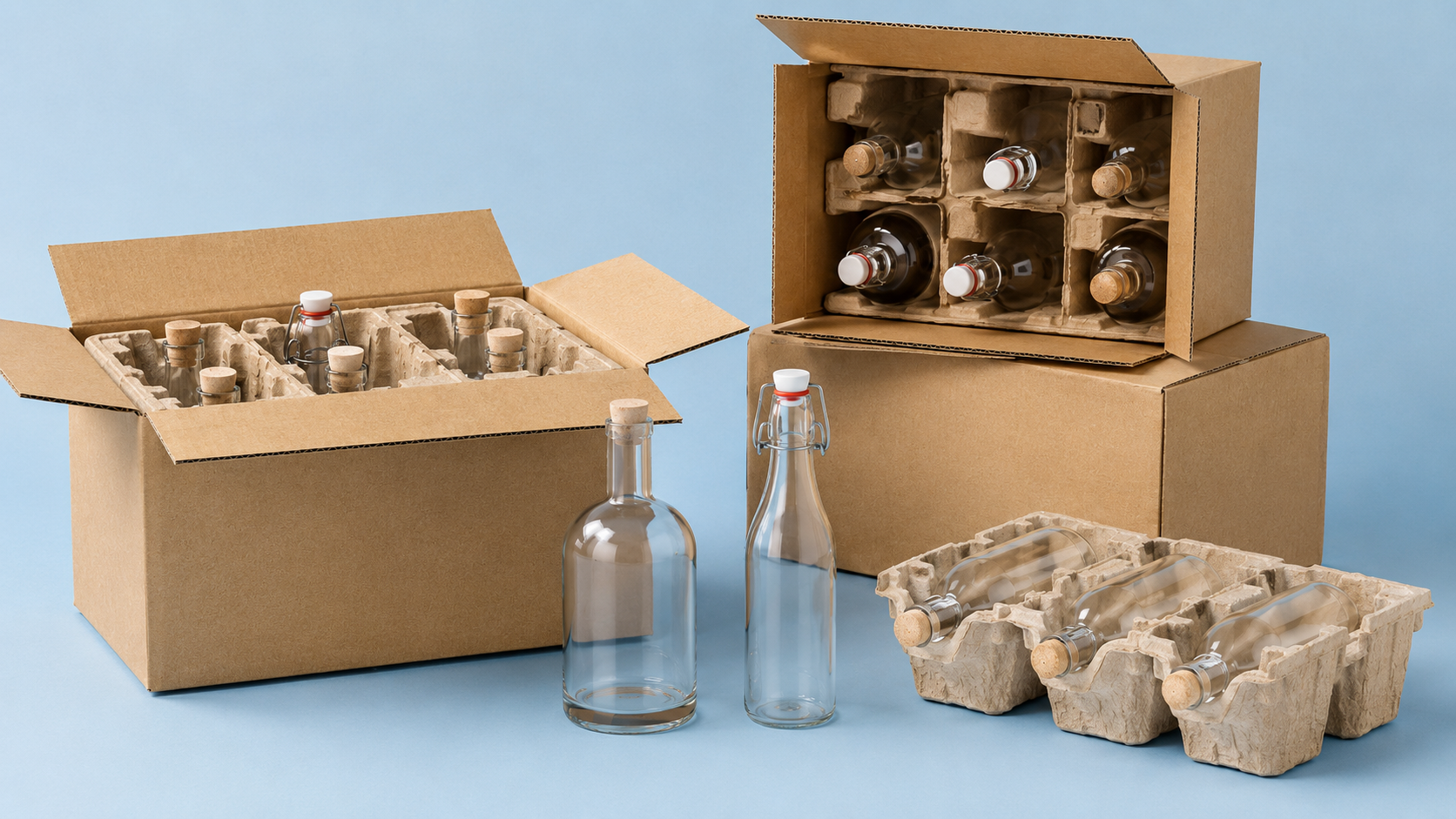
A bottle that performs well on a supermarket shelf may still fail during courier or export movement. As direct-to-consumer beverage businesses and online gifting continue to develop, transport performance is becoming a more important part of glass beverage bottles selection.
Beverage packaging may need to withstand:
- Warehouse handling
- Truck vibration
- Repeated case movement
- Impact during sorting
- Temperature variation
- Different storage orientations
- Long-distance shipping
Breakage, leakage, cap movement, label scuffing, and bottle-to-bottle contact can create replacement costs and damage customer trust.
For e-commerce-ready glass beverage bottles, brands should evaluate the complete packaging system, including bottle dividers, inserts, cartons, case strength, neck protection, closure security, and empty space inside the shipper.
Packaging should be tested in the configuration that will actually reach the customer. Testing the primary bottle alone does not represent the full distribution environment. This is especially important when glass beverage bottles are sold in multipacks, gift sets, or mixed-SKU cartons.
This connects bottle design directly with profitability. A slightly more efficient packaging system can reduce damage while improving packing speed, warehouse consistency, and customer experience.
Packaging Minimisation and Export Compliance Shape Development Decisions
Regulatory expectations around packaging are influencing both local and export decisions. For companies selling internationally, glass beverage bottles must be considered alongside labelling rules, food-contact requirements, transport expectations, recycling systems, and market-specific packaging legislation.
For beverage brands, practical questions include:
- Is the bottle heavier than required for its function?
- Can secondary packaging be simplified?
- Is the bottle compatible with established recycling streams?
- Could the format support reuse in a realistic system?
- Are environmental claims supported by evidence?
- Does the decoration affect sorting or recycling?
- Are packaging specifications and supplier documents controlled?
Export requirements vary, so no single bottle specification is automatically suitable for every destination.
The strongest glass beverage bottles strategies combine design appeal with technical documentation and market-specific compliance planning. This can reduce late-stage redesigns and give brands more confidence when entering new territories.
Bottle Families Replace One-Off Packaging Decisions
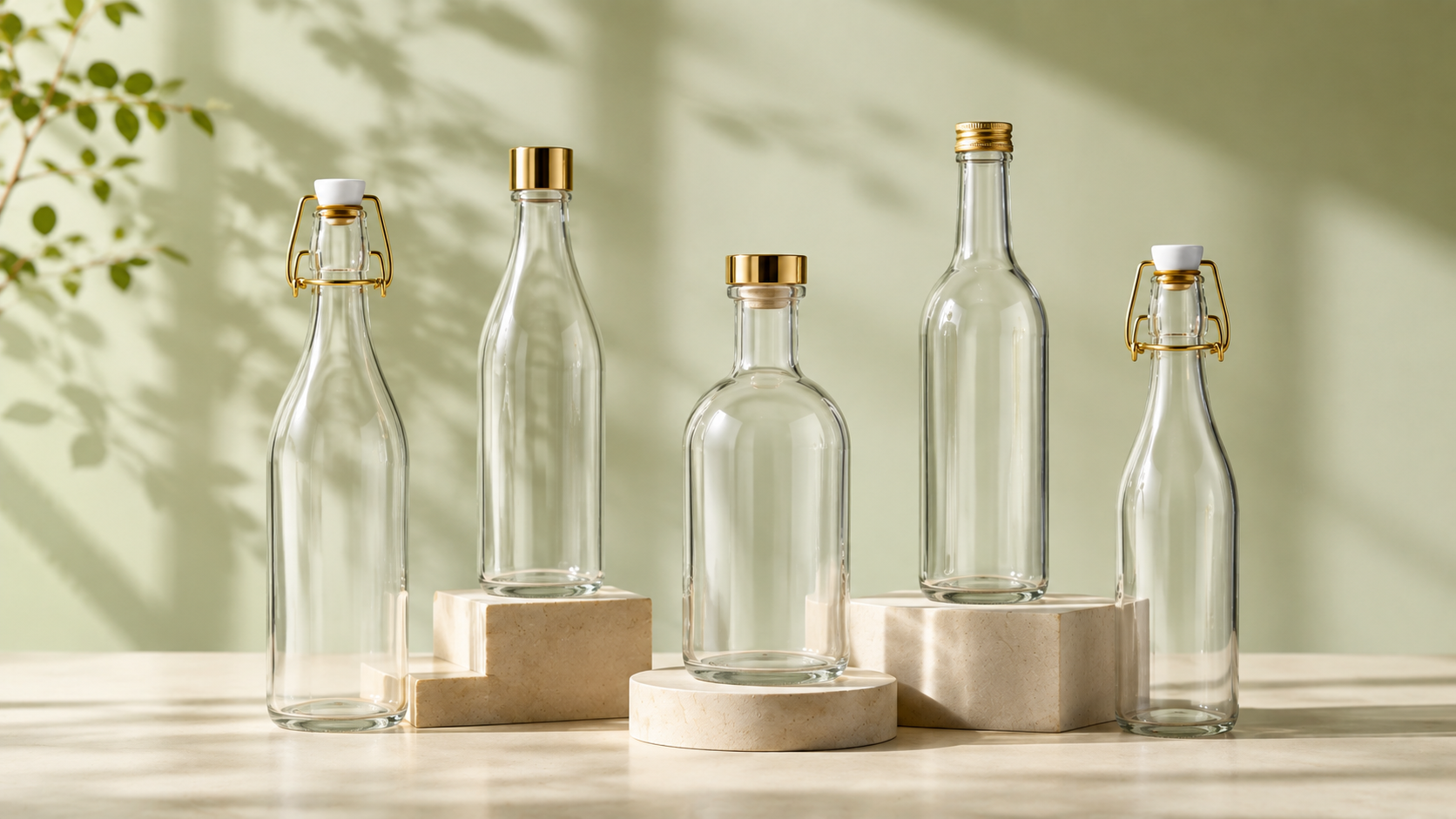
Another important development is the move toward packaging families. Instead of choosing a completely different bottle for every flavour or SKU, brands are increasingly creating a consistent system around one or two core glass beverage bottles.
The same bottle family can be differentiated through:
- Different labels
- Colour coding
- Alternative closures
- Multiple capacities
- Seasonal sleeves
- Variant-specific printing
- Gift cartons
- Premium editions
This approach can strengthen brand recognition while simplifying procurement and inventory management. It may also help companies consolidate order volumes and reduce the operational complexity of handling too many bottle shapes.
For brands planning several launches over the next three to five years, glass beverage bottles should be selected with portfolio architecture in mind. A shape that works only for one product may create unnecessary sourcing challenges later.
A scalable bottle platform can support juices, flavoured beverages, mixers, syrups, water, or other related products while allowing the graphics and closures to communicate differences between variants. This is one reason many brands prefer working with a beverage bottle supplier that can support both containers and compatible components.
The best glass beverage bottles do more than package the first launch. They create a recognisable foundation that can support long-term brand growth.
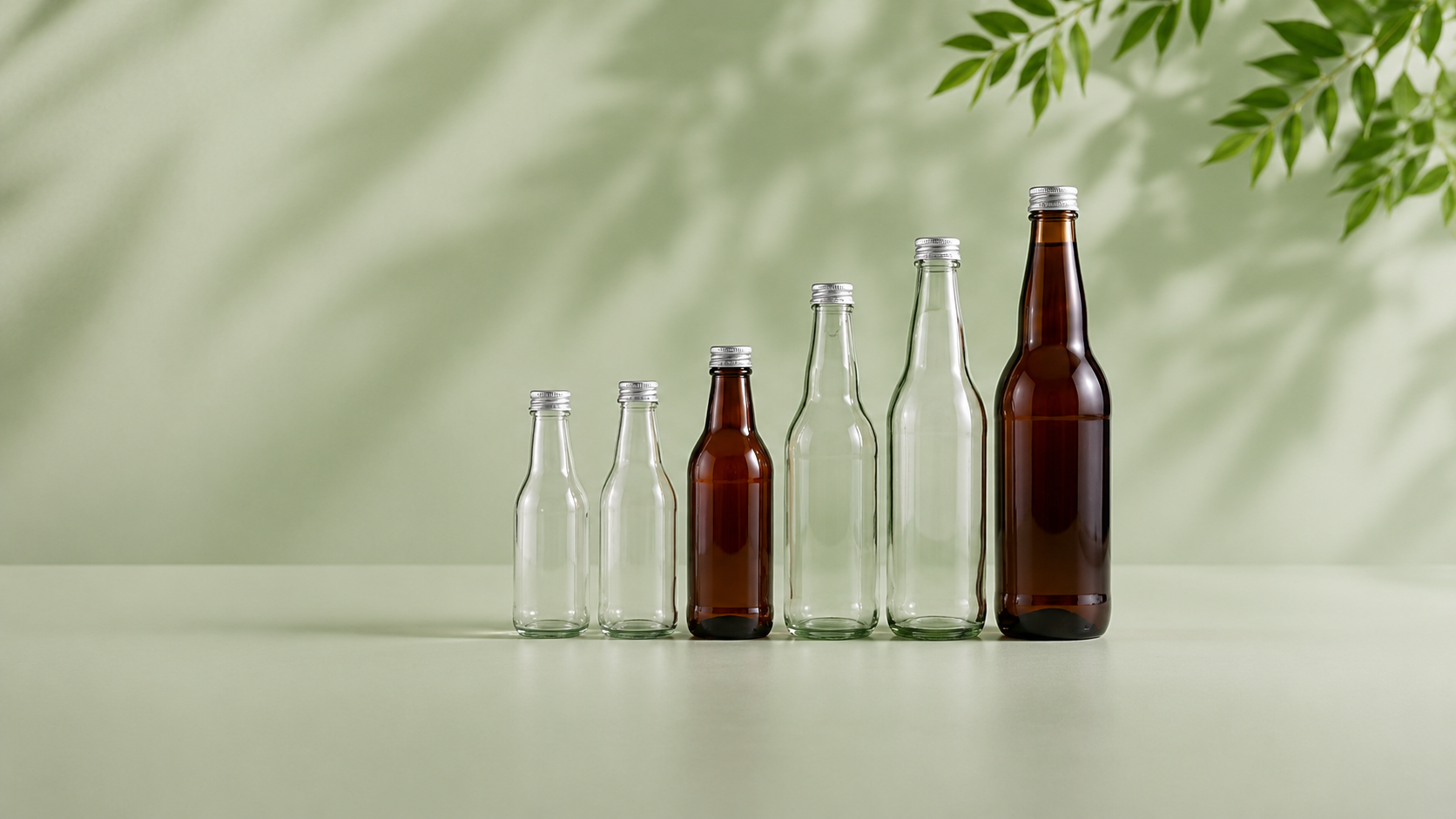
Conclusion: The Best Glass Beverage Bottles Balance Brand Value With Operational Performance
The most important glass beverage bottles trends of 2026 are not only visual trends. Lightweighting, reuse, strategic stock-bottle customisation, production-friendly shapes, smaller formats, coordinated closures, filling compatibility, transport durability, regulatory planning, and scalable bottle families all reflect a wider shift in beverage packaging.
Brands now need packaging that can protect the product, look distinctive, run efficiently, travel safely, support compliance, and remain commercially practical as volumes grow.
The objective is not to adopt every new packaging idea. It is to select glass beverage bottles that match the formulation, filling process, target consumer, price positioning, distribution model, and long-term product strategy.
Ajanta Bottle helps food and beverage brands explore glass bottles, jars, caps, closures, decoration possibilities, packaging development, and related solutions for new launches and expanding product ranges.
By discussing bottle capacity, neck finish, closure requirement, filling process, decoration, order quantity, target market, and logistics early, beverage companies can build a packaging system that supports stronger shelf presence, smoother operations, and long-term business growth.
Ajanta Bottle: 45 Years of Packaging That Builds India’s Shelf Presence
With over 44 years of legacy in the Indian packaging industry, Ajanta Bottle has become more than just a packaging supplier it is a trusted partner to brands looking to scale, differentiate, and lead through design.
From the early days of supplying classic glass containers for pharmaceuticals and household staples to now providing premium glass jars, lightweight bottles, and customized aluminum cans for food and beverage businesses, Ajanta has stayed ahead by understanding what packaging really means in a competitive market.
We have worked with countless Indian brands, both legacy and new-age, helping them:
Launch shelf-ready products with strong first-impression value
Shift from plastic to glass to enhance sustainability and consumer trust
Integrate packaging design with brand stories for premium perception
Optimize for retail stocking, e-commerce delivery, and food service convenience
Our in-house decoration unit, innovative packaging machinery under Akikai, and continuous investment in research and customer education (through platforms like PackSchool) make us uniquely placed to support packaging transformations that matter.
Whether it’s a cold-pressed juice in a sleek amber glass bottle or a handcrafted pickle in a heritage-inspired jar, Ajanta Bottle enables food and beverage brands to lead with packaging that speaks louder than words.
We don’t just supply containers.
We build packaging stories that sell.
Ready to create the perfect glass packaging for your brand?
Connect with us:
● Email at sales@ajantabottle.com
● Phone/Whatsapp: +91 9891098918
You can also shop from more than 500+ packaging solutions on www.ajantabottle.com – India’s first ever comprehensive packaging e-commerce portal.
For additional information, browse through our blog at https://www.ajantabottle.com/public/blog/ or subscribe to our latest updates through our social media channels,
*YouTube channel: https://www.youtube.com/c/Ajantabottle
*LinkedIn Page: https://www.linkedin.com/company/ajantabottle
*Facebook Page: https://www.facebook.com/glassbottleindia
*Instagram Page: https://www.instagram.com/ajantabottle
*Google Business Profile Manager: https://g.page/r/CXTH9MKpe2DuEBM/review